


Canary Mugume is an enigma out there. Until I became his work colleague, that was the impression I had — or even much more. Things like he has a military bodyguard and can wake the President up in the dead of the night to say what snack he wants to eat.
Back in the day, I heard them say he didn’t earn it. That he was handed the mic on a silver platter, all charm, no chops — the handsome face that walked into TV stardom through the flywhisk flung here and there.
But rumours have a way of skipping rehearsal.
For a guy who is constantly oscillating between TV, radio, digital, and emceeing gigs, there is no flywhisk or good looks that could sustain such a chaotic rhythm. That kind of stamina is forged, not faked.
Over the past 15 months at Next Media Park, I’ve observed the guy who, once immersed in scripting, forgets he’s alive. The guy who, if breaking news erupts at 2am, is one of the few journalists you will be sure to find awake — sometimes dropping a major tip in real time while still live on air.
Just how in hell's kitchen of this career called journalism does he do it?
"Like last night," he tells me with a laugh that carries a tired edge. "I finished Live At 9, had to travel to Kapchorwa. Reached at 5am, didn’t sleep, did a gig. It’s done, I’m going back to Kampala to make it on time for Big Talk, and Live At 9, and tomorrow I have the Saturday Big Talk."
The Sebei district of Kapchorwa is some 310km in the east. That is a good six hours in normal traffic.
If all it took was good hair and a decent jawline, then the broadcast industry would be filled with models. But it’s not. And Canary is certainly not a model, maybe a role model to many already.
The newsroom grind isn’t sexy. It’s early mornings, late nights, silence, deadlines, tense scripts, hard questions, cancelled plans, and ten thousand shots at getting one thing right.
Behind the polished suits and easy smile is a journalist who has earned every breath behind that anchor’s desk — and every second on air is a masterclass in persistence over privilege.
Yes, he has connections. But that’s not a confession; it's a strategy.
Learning the gulf between TV and print media threw up me the reality that anchors are not just faces on set who are fed scripts through the autocue - they must have it all and in a way, own it.
News anchors play a crucial role in not just reading the news but bringing it to life. Their presence, delivery, and journalistic intuition can make a big difference in how effectively news reaches and resonates with the audience.
The Canary that is the NBS talent exudes a polished, youthful charm — the kind that commands attention quietly rather than demands it. His grooming is meticulous: a clean, close haircut neatly tapers at the sides, while his face carries a soft, confident expression that balances seriousness with warmth.
There's always almost this calm assurance in his posture, whether he's seated with arms confidently folded or leaning slightly forward with a relaxed smile, or even when he's trying to beat the deadline and before a bulletin.
Overall, he comes across as a confident professional with style, charisma, and a strong sense of presence — that guy who easily fits in front of the camera or at the head of a strategy table.
But Canary’s story is far from a fairy tale and glossy description of the suave and debonair youth. His journey into journalism was deliberate and hard-won. Growing up, the living rooms where the news played were his early classrooms.
Anchors like Maurice Mugisha, Gabriel Epenu, and Josephine Karungi were more than just familiar faces; they were inspirations that planted a seed.
As a teenager, Canary’s routine was almost ritualistic: recording the news on radio at night and reading it out loud the next morning on the school parade ground.
“I never missed news,” he recalls, “I knew I would be doing this someday, though I wasn’t sure how.”
He started his television career not through connections, but by showing up and learning.
“I literally walked into TV stations, watched how things were done, studied scripts, broadcast techniques. I had big assumptions but quickly realised it was a different game,” he says.
Though initial attempts to break into Kampala’s competitive TV scene proved tough—like trying to launch a youthful show on a phone camera for Urban TV without success—Canary found his footing at Channel 44, where he spent over two years sharpening his skills.
It was there that NBS TV noticed his potential and brought him in for professional training.
Canary’s growth didn’t stop there. He pursued further training in TV production, editing, and digital media through collaborations with international bodies like the US Agency for Global Media, the BBC, and VOA.
“These experiences have been instrumental,” he says. “They taught me how to adapt, innovate, and deliver quality journalism in a fast-changing media landscape.”
Reflecting on his career highlights, Canary’s eyes light up when he talks about covering elections. From Ugandan elections for NBC, and the Rwanda and Kenya elections.
“There’s something powerful about being the voice millions depend on to make decisions that shape their lives,” he explains.
“The whole country waits on you for updates, and that responsibility is immense. It’s where journalism truly shows its impact.”
These are things he said long before he was in California to cover the 2024 US Presidential Elections. This is the centre of gravity for global politics and being in the thick of it out there was no doubt the highlight of his career.
But journalism is not without its dangers. One of his worst memories involves covering the murder scene of former police officer Mohammed Kirumira. He found himself trapped in a tense standoff between furious civilians and riot police.
When a colleague was injured by a thrown stone, their live coverage was paused to get him medical attention. Shortly after, the arrival of the President sparked a chaotic scene where they were forced off the location by security forces.
It was a raw moment that tested Canary’s resolve and underscored the risks journalists face daily.
But this talk took place before the Kawempe North by-election in March this year. Canary did come across yet another deadly face of journalism when military men confronted and beat up journalists covering the chaotic polls.
A particular clip has him in the crosshairs, when two military men branding cables suddenly pulled up from a motorcycle only to stop short of whipping the news anchor on the street.
His colleagues were not as lucky as photojournalist Francis Isano was assaulted and sustained serious injuries that kept him hospitalised for weeks.
Getting personal
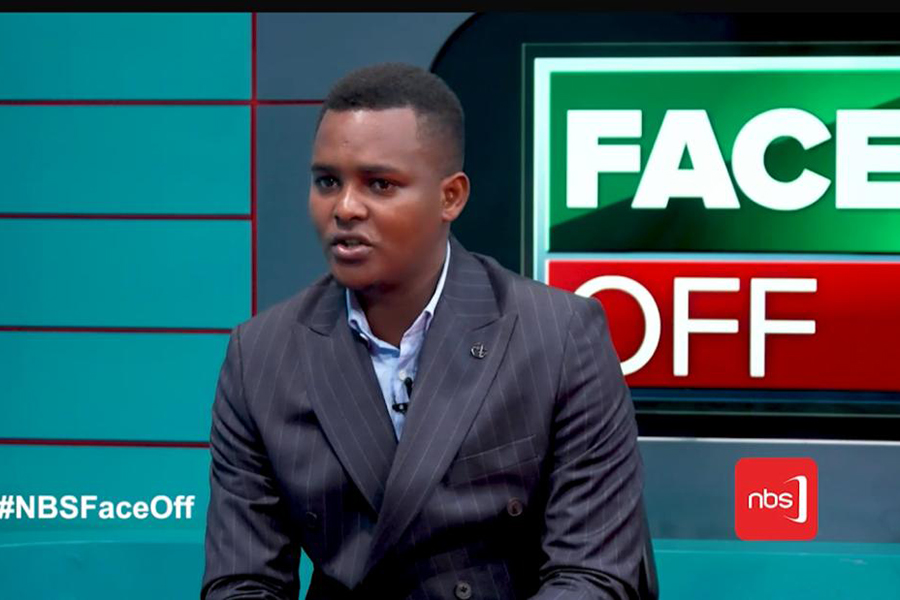
Interviews are the lifeblood of broadcast journalism, and Canary has conducted many. Yet, one stands out: his sit-down with President Museveni during the height of the COVID-19 pandemic.
“It was a moment when the nation needed clear answers on lockdowns, elections, school closures,” Canary recalls.
“The President’s grounded, consistent responses gave the country a sense of direction. That interview reminded me why journalism matters—it can be a beacon in crisis.”
Despite his rise, Canary has not escaped skepticism. Gossip whispers that his ascent is due to “golden connections,” insinuating privilege over merit. He addresses this perception with candid pragmatism.
“It’s not loose talk. Connections matter. Your network is your net worth,” he admits. “In journalism, exclusive stories and interviews come from relationships you build and maintain. If you’re not networking, you’re not working.”
Asked about the journalists who define professionalism in Uganda, Canary names Risdel Kasasira (Kasasira died in January this year in a motor accident), Andrew Bagala, and Tabu Butagira—figures whose work he follows religiously and respects deeply.
Yet, he sees challenges for press freedom in Uganda, especially from corporate interests.
“Businesses that fund media through advertising often influence what can be reported. This limits the scope of investigative journalism,” Canary explains. “But there is hope. If we push for quality journalism worth paying for, we can create space for freedom.”
What about the state of investigative journalism? Canary believes it still lives, though threatened. Social media users tagging journalists to dig deeper in tough stories proves trust in their capacity.
“The coffin isn’t ready to be lowered, but if journalists don’t resist pressure from state and corporations, it will be,” he warns.
“Investigative journalism is the bulwark against power abuse and vital to democracy. We must fight for it.”
The first day on a live TV set is a memory etched in humility. “I had never stammered before, but on that day, reporting on a building fire, I froze,” he confesses. “I felt like a loser, ashamed to meet colleagues’ eyes. But I never gave up. Practice made the mic my favorite gadget.”
Behind the scenes, Canary credits Andrew Mwenda, the proprietor of the Independent magazine, as a key mentor—someone who not only inspired his career but threw him into the deep end to swim.
“He taught me the power journalism holds and the risks involved in holding power to account. I’m ready for those risks.”
At 30, Canary’s ambition is clear: to tell Africa’s stories from an African perspective.
“I wake up wanting to tell the African narrative through African eyes, not through western experts,” he says passionately. “The best experts on Africa are Africans who live the realities.”
When I ask what kind of Cabinet minister he would be, he laughs off politics with a candid shrug. “I’m not sure I was built for politics.”
In the newsroom, Canary is more than a face or a viral name. He is the embodiment of perseverance, a man who took the long route, learned the craft, and continues to hustle in a demanding, unforgiving industry.
The enigma of Canary's bee-like workaholism has left his fellow anchor Sheila Tusiime at loss. As I finalised this article, Canary shared a voice note from Sheila who was wondering how he does it.
"Now I'm tired," she says, a few minutes at the top of 3pm. "You can't believe now, I feel tired."
She wonders how Canary is able to oscillate from one thing to another and face cameras endlessly when she would be so camera fatigued by the end of her routine.
"Like [sometimes] I don't want to look into another camera. I found you filming. You filmed. You went on radio... I don't know if you made it all the time," she says.
"How you are switching from your first conversation to three, four episodes of a podcast, completely different topics. going through that anxiety of 'will I make it on time?' and going on air and just fitting into that conversation, answering calls, responding to all these and then getting into that news.
"I just want to give you your flowers and tell you you are who you think you are... you're a star!"
This is the story of Canary Mugume's journalism routines. A maddening routine.
His is story of grit beneath glamour, of earned privilege rather than handed opportunity, and of a journalist who knows his work is never done.
