

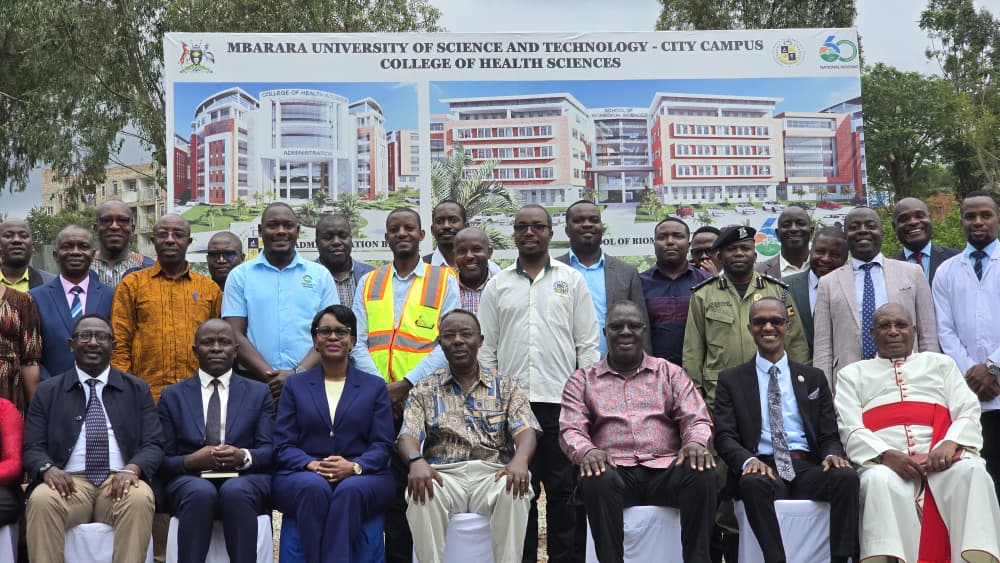
Mbarara University of Science and Technology has officially launched construction of a Shs180.8 billion College of Health Sciences complex, marking a significant expansion of medical training and research capacity in western Uganda.
The project, contracted to the National Enterprise Corporation and the National Housing and Construction Company, is expected to be delivered in phases, with completion of the first phase targeted within 24 months.
Vice Chancellor Pauline Byakika-Kibwika said the new facility will play a critical role in addressing national healthcare gaps by expanding student intake and improving the quality of training.
“This facility will facilitate the training of students, significantly boosting our admission capacity. Beyond numbers, it provides a modern learning environment that will enhance research capacity for the faculty and, ultimately, improve the health of the general population,” she said.
The Chairperson of the University Council, Warren Namara, described the project as a long-term investment in Uganda’s medical workforce.
“The project is not merely about bricks and mortar, but about securing the future of Uganda’s medical workforce. With the first phase already underway, the university is poised to become a central hub for innovation and clinical expertise in East Africa,” Namara said.
Phase One of the project will focus on constructing the School of Biomedical Sciences and the College of Health Sciences administration block, with a budget of Shs96.7 billion. The full complex is projected to cost Shs180.83 billion upon completion.
Faculty of Medicine Dean Erias Kumba Kumba said the development will significantly improve the learning environment and institutional capacity.
“This is a milestone for our faculty. We shall have more space and an improved learning environment,” he said, adding that the facility could support training for between 20,000 and 30,000 students once complete.
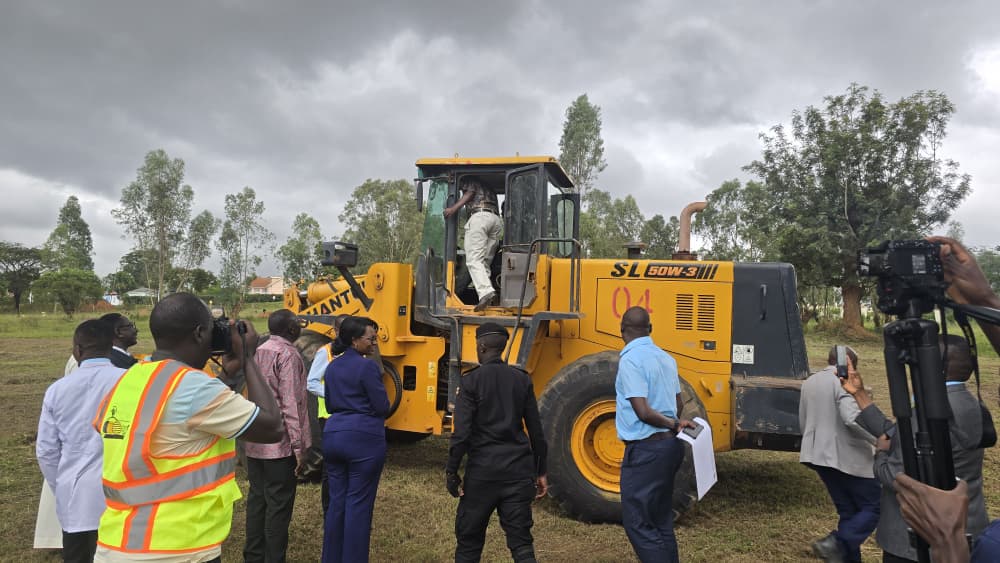
The Deputy Managing Director of NEC, Innocent Oula, assured university leadership that the contractors have the capacity to deliver the project on schedule.
“We have enough manpower and the capability to handle multiple large-scale projects. We commit to delivering a structure that meets your requirements within 24 months,” he said.
By partnering with NEC—the commercial arm of the Uganda People’s Defence Forces—and the National Housing and Construction Company, MUST aims to leverage local expertise to ensure high construction and functional standards.
The development is expected to position the university as a leading hub for biomedical research and clinical training in East Africa, while contributing to the broader goal of strengthening Uganda’s healthcare system.
