

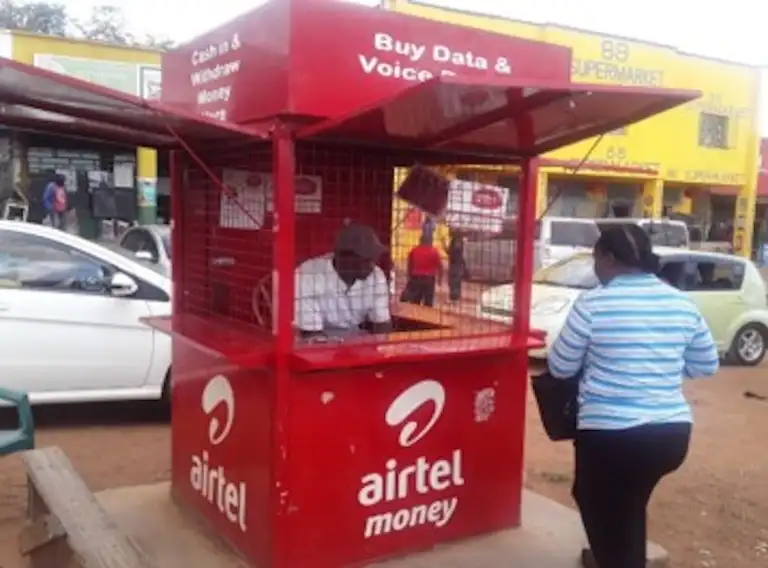
Telecom and mobile money operators have called on Parliament to reduce the excise duty on mobile money withdrawals from 0.5% to 0.25%, arguing that the current rate undermines financial inclusion and digital transformation efforts.
Appearing before a parliamentary committee, a joint delegation from MTN Uganda, MTN Mobile Money, and Airtel Money Uganda presented proposals on taxation under the ongoing scrutiny of money bills.
The delegation included senior executives such as Airtel Money Executive Director Japhet Aritho and MTN Mobile Money General Manager for Corporate Services Dennis Kabugo, among others.
Tax burden affecting ordinary Ugandans
Presenting on behalf of the team, MTN’s Dennis Kabugo said the 0.5% excise duty on withdrawals directly affects ordinary Ugandans who rely on mobile money for daily transactions.
He argued that the tax is often borne by both senders and recipients, making transactions costly for citizens—particularly beneficiaries of government programmes such as the Parish Development Model (PDM), Emyooga, and SAGE.
“Mobile money is no longer an emerging service; it is now a primary financial infrastructure,” the delegation submitted, emphasising its central role in Uganda’s economy.
According to the submission, reducing the tax rate would increase transaction volumes and ultimately boost government revenue in the long term.
“When the tax was introduced in 2018, transaction volumes dropped by 49%. Following revisions, volumes recovered,” Kabugo noted, citing past trends.
Proposed reforms
The telecom operators proposed two key reforms: reduction of excise duty from 0.5% to 0.25% and introduction of a cap of Shs5,000 on high-value transactions.
They argued that a capped and reduced tax structure would encourage more digital transactions while protecting low-income users.
Projections submitted to the committee indicate that government could collect up to Shs80 billion in the 2025/26 financial year, rising to Shs158 billion by 2029/30, driven by increased usage of mobile money services.
