

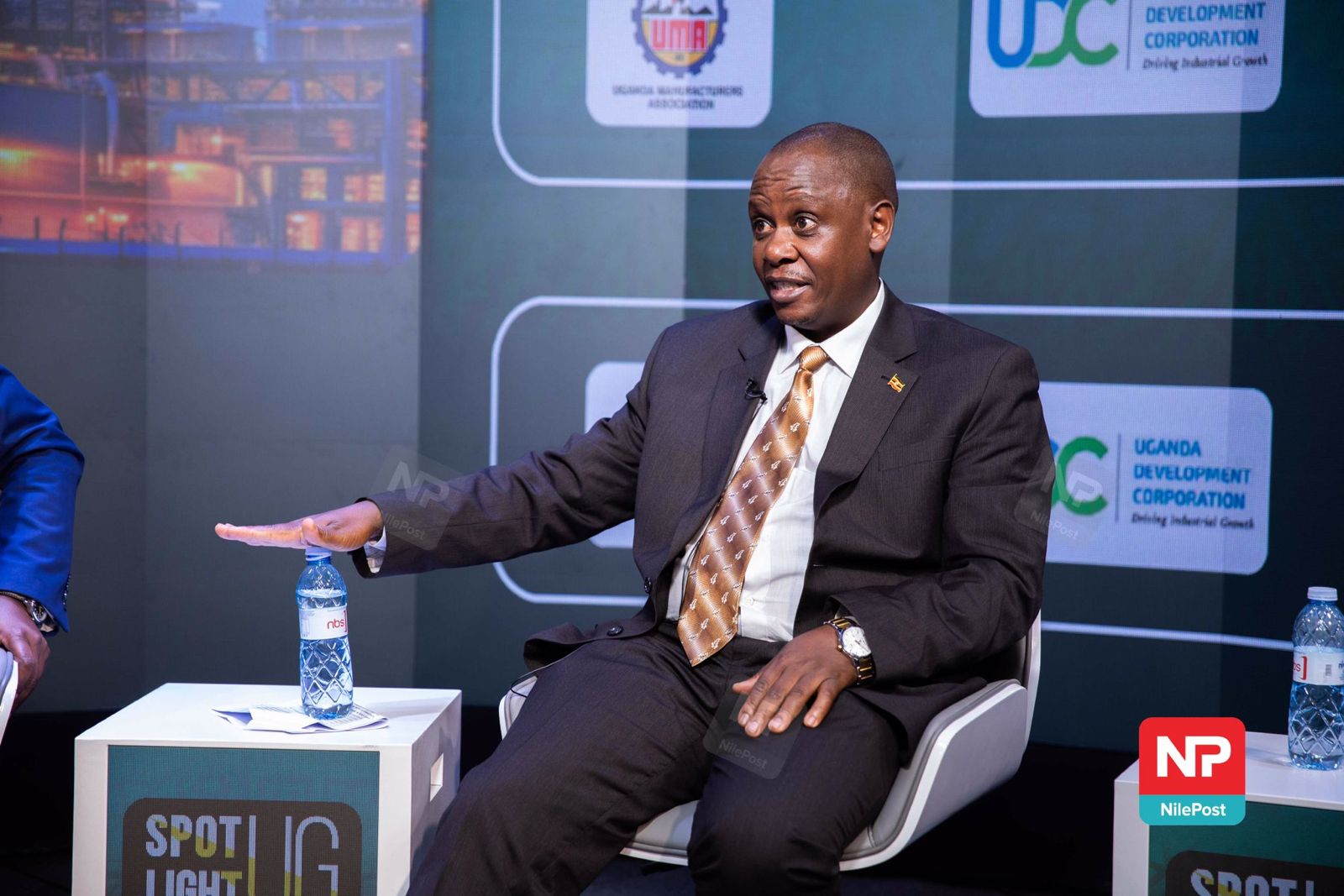
The Ministry of Trade, Industry, and Cooperatives (MTIC) is tackling product competitiveness through a three-pronged strategy focused on lowering production costs, enforcing quality, and ensuring speed to market. This was the message from Mr. Ainebyona Denis during his appearance on NBS TV's "Spotlight UG" media engagement on Monday, 20th October.
Host Mildred Tuhaise set the stage by asking the Commissioner for Industry how the ministry is dealing with this issue of competitiveness squarely to ensure Ugandan products are not rejected in regional and international markets.
Commissioner Mr. Ainebyona Denis provided a clear breakdown of the government's approach. "Competitiveness is critical," he stated, identifying the three pillars that determine it: cost of production, quality, and time to market.
On cost, Mr. Ainebyona Denis confirmed that the ministry’s daily business is policy work aimed at lowering the cost of doing business in this country. On quality, he detailed a hands-on approach. The ministry, he explained, has a dedicated department of business and quality assurance that handholds some of these enterprises, working alongside the Uganda National Bureau of Standards (UNBS) to meet all requirements.
On time, Mr. Ainebyona pointed to massive government investment in infrastructure, including roads and the introduction of Uganda Airlines cargo planes, which ensure that our products can be able to get to these markets in real time.
He also highlighted the critical role of packaging, noting, "the package tells a lot about the product before you go to see what is inside," and confirmed MTIC is working with partners like UDC to build a robust local packaging industry.
Finally, Commissioner Mr. Ainebyona Denis explained the ministry's proactive role in market intelligence and policy. He said a dedicated team goes into different markets, studies them, and gets to know what they need, bringing that information back to Ugandan businesses. Simultaneously, the ministry engages in bilateral dialogues to harmonize standards and remove non-tariff barriers, creating a "passport" for products tested in Uganda to be accepted abroad.
