

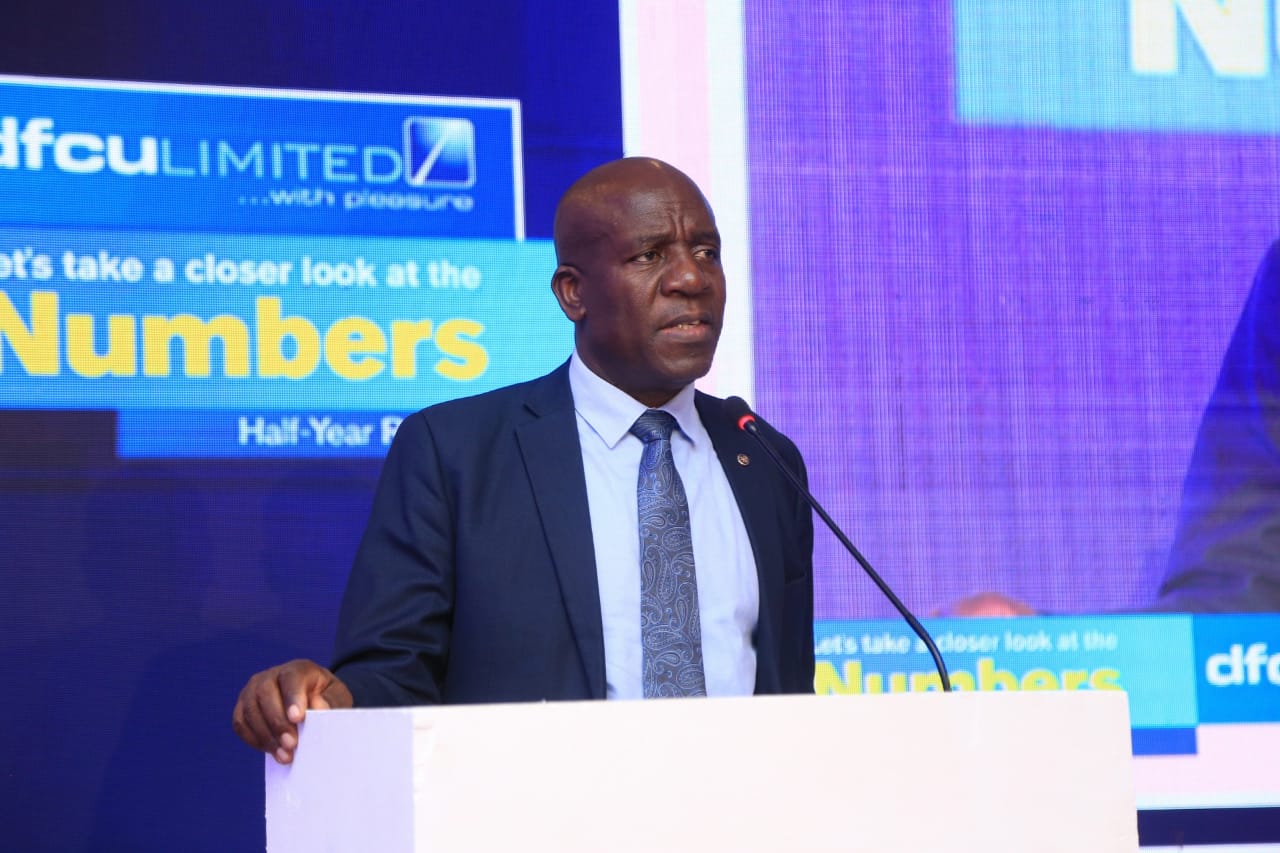
Dfcu Bank has registered a profit jump to Shs29billion according to the results for the half year ended June 30 announced on Thursday.
“Our net profit after tax has grown by 56% to shs29 billion from the shs18 billion registered in the same period in the year 2022. On the other side the liquid position has grown by 20% which means we are now in a much better position to grow, lend out and support businesses in Uganda,” said Kate Kiiza, the Dfcu Executive Director.
Kiiza attributed this growth in profits to mainly lower net position on recoveries which meant lowering of costs in doing their business.
“The growth in profitability to the customer means this is a bank that is strong and will continue to be stable and it is safe to put your money in it. Dfcu is a listed entity and the over 4000 shareholders will get better return to their pockets and a better return to the economy.”
According to the results announced on Thursday, the number of customers for Dfcu bank has also grown by 10% to see 200,000 new customers join the bank whereas the number of borrowers has grown by 11%.
The bank’s customer deposits have grown by 2% to shs2.5 trillion whereas the earnings per share for shareholders are at 56% and its tax contribution reached shs55.6billion while on the other side, 83% of the bank’s transactions were digital.
“The growth of customer deposits was due to the bank investing inconvenience for customers to ensure they access digital channels. The other driver was around growth in the number of customers and deposits grew in tandem.”
On the other side, Dfcu invested shs1.3billion in the half year ended June, 30 whereas the number of ATMs, branches and agents grew to 76, 55 and 1876 respectively.
According to the Dfcu CEO and Managing Director, Charles Mudiwa, the bank will continue supporting agriculture as one of the sectors that supports Uganda’s development.
“To date, over shs100billion in credit has been provided to women in business to date, reached, over 10,000 farmer groups reached out by Agri-business Development Centre, 230 graduated from Business Accelerator program, over 33,000 saccos and investment clubs served with tailored solutions,” Mudiwa said.
“We are looking at supporting more SMEs and making more partnerships that can make an impact in communities and create sustainability among businesses to increase financial inclusion, access to finance and create market.”
