

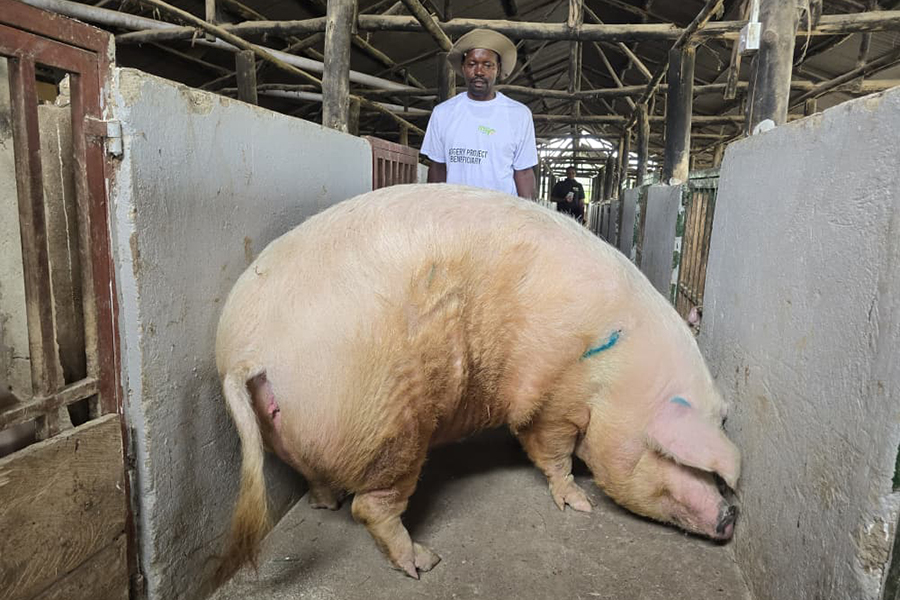
More than 10,000 people across the Kigezi sub-region have lifted themselves out of poverty and food insecurity through a piggery project supported by the Microfinance Support Centre (MSC), which has increased household incomes, improved food production and restored depleted soils using pig manure.
The initiative began in 2020 with 100 pigs given to the Rukungiri Producer Cooperative Union. The pigs were later multiplied and freely distributed to community groups across six districts in Kigezi, including Rukungiri, Kabale, Kanungu, Kisoro and Rubanda.
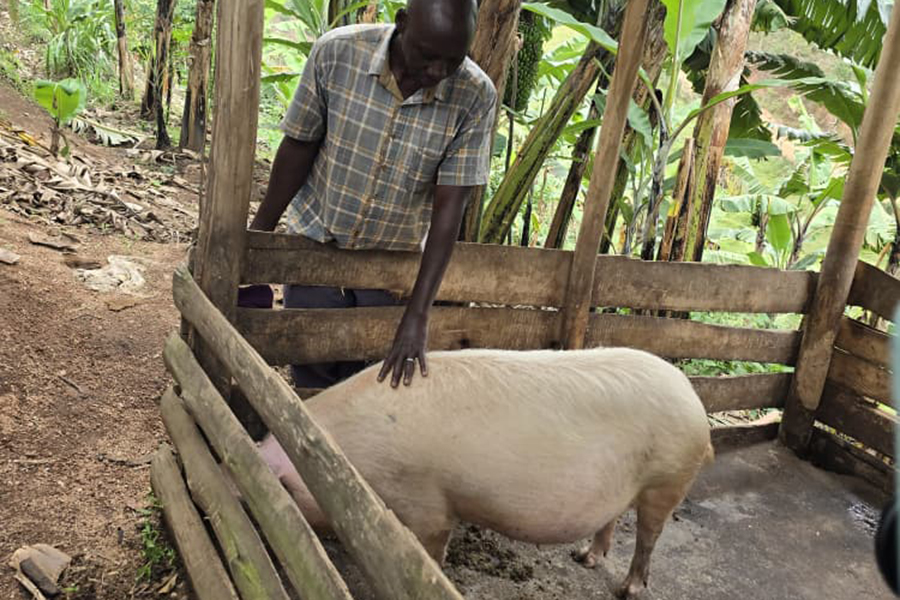
Seventy-six-year-old Turyazayo Kuruda Tumuhirwe is among the beneficiaries under the Kyigina Bakyara Tukwatanise group. She says the piggery project has enabled her to educate her orphaned grandchildren.
“Since I got these pigs, they have become my biggest source of income. I use the money to pay school fees for my grandchildren who lost their parents. I will continue supporting them until they finish school,” Tumuhirwe said.
The project has also provided a sustainable livelihood option for retirees. Jenny Bahangyirire, a retired teacher and chairperson of Shongora Twetungure Group Piggery Project in Rukungiri, and retired Reverend Shem Turyahikayo, chairperson of Kayungwe Farmers and Piggery Project in Kanungu District, say piggery has become a reliable development plan after retirement.
“I am earning good income from this project, and the manure from the pigs has boosted my coffee and banana production,” Reverend Turyahikayo said, although he noted that the high cost of pig feeds remains a major challenge.
The initiative has also attracted youth participation, while providing farmers with manure that has restored depleted soils and improved productivity.
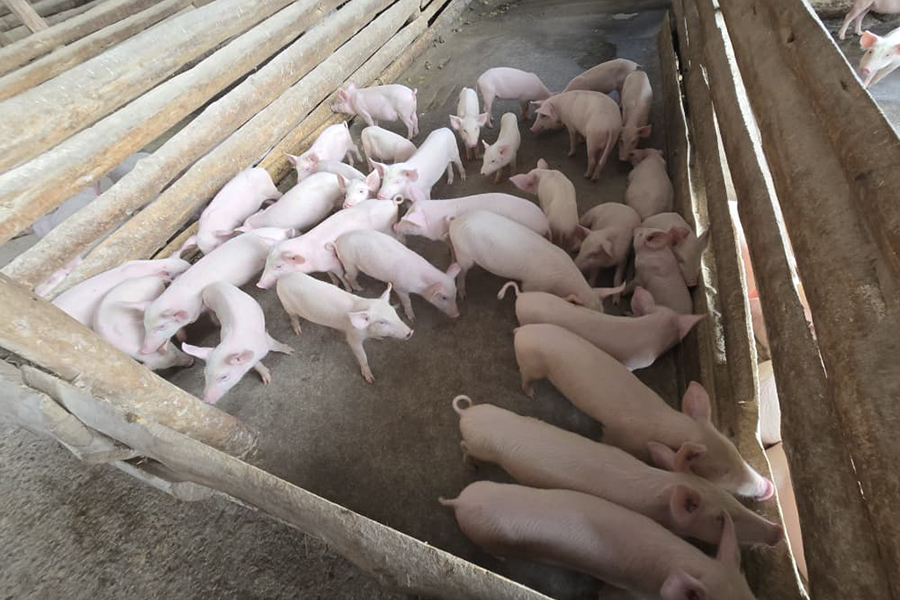
Dr Samuel Akankwatsa, chairman of Rukungiri Producer Cooperative Union, explained that the project was designed to address soil degradation that had affected parts of Kigezi for years.
“Our goal was to solve the challenge of depleted soils. Rukungiri was previously dominated by cattle keepers, but population pressure and migration left the soils exhausted. We introduced pig manure as a solution. Today, people have food because they are using manure from pigs,” Dr Akankwatsa said.
He added that MSC initially supported only one county but has since expanded to six districts, where beneficiary groups receive pigs free of charge.
Dr Akankwatsa emphasized that proper feeding is critical to disease control and productivity, noting that well-fed pigs attract better market prices.
So far, 264 groups and more than 10,000 people have directly benefited from the MSC-supported piggery initiative. MSC plans to support an additional 146 already identified community groups with pigs before the end of 2025.
Under the programme, MSC provided 100 pigs of Camborough, Large White, Duroc and other crossbreeds to the Rukungiri Producer Cooperative Union to support the active poor.
Despite the successes, beneficiaries report challenges including expensive feeds, water shortages and transportation difficulties.
MSC’s Operations Manager for Kigezi Sub-region, Lydia Namara, said while communities continue to request more support, money alone cannot solve development challenges.
“Some groups are asking for more money, yet they already received pigs. There will never be enough funding. Communities must utilize the seed capital and livestock we provide so they can multiply and allow us to support many others,” Namara said, adding that MSC is encouraging groups to form savings and lending associations.
Beneficiaries have commended President Museveni and MSC for supporting the initiative, which they say has transformed livelihoods and strengthened food security across the region.
