

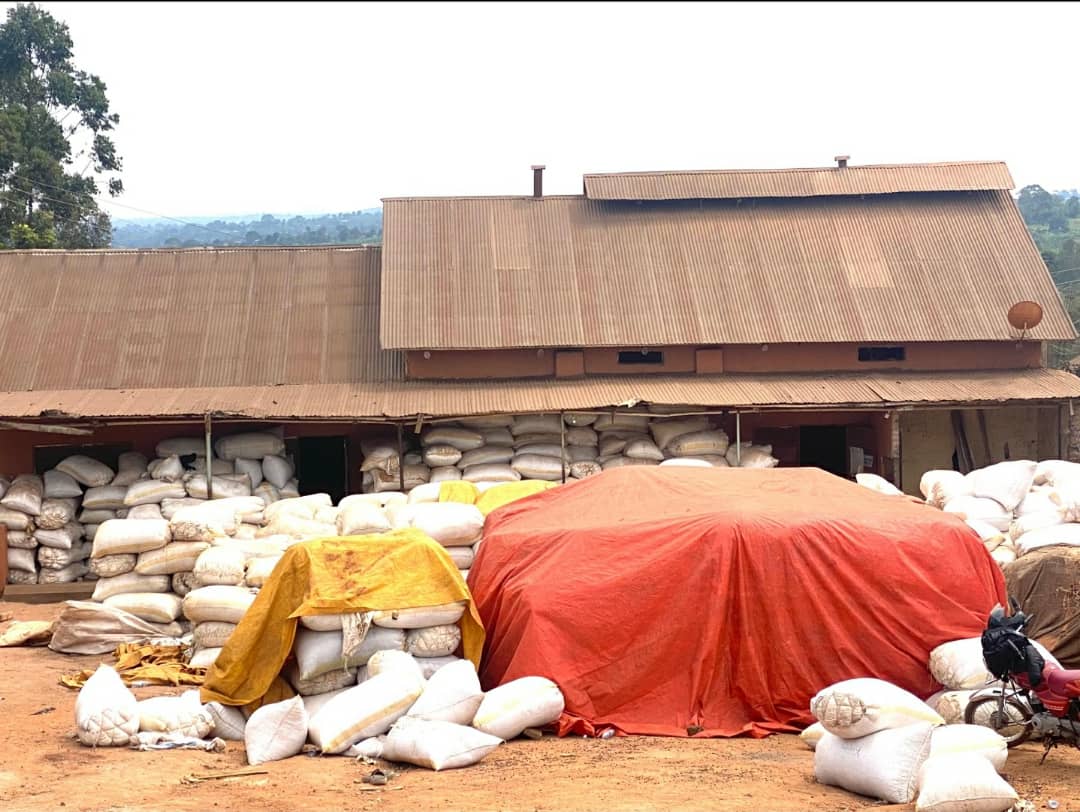
Whereas in past years coffee farmers were thriving due to favorable prices, today the same farmers and traders are crying out loud as prices have dropped drastically—so much so that even the buyers seem to have disappeared from the market.
According to statistics from the Uganda Coffee Development Authority (UCDA), Bukomansimbi District, located in the Greater Masaka region, was the leading district in coffee production in the country, with more than one million bags of processed coffee
However, in the 2025 harvesting season, farmers from Bukomansimbi and others across the country are likely to suffer losses as prices have fallen and many have not yet sold their produce.
To better understand how the price drop has affected coffee farmers in Bukomansimbi, I spoke to some of them, starting with Namaganda Anet, a resident of Meeru village in Butenga sub-county.
“I don’t know what to do anymore. The money we expected is not coming in, and I’ve lost hope,” Namaganda said in despair.
Namaganda is not alone as every farmer and trader seems to wear the sorrow of the coffee crisis.
At the moment, coffee processing machines in Bukomansimbi are full to capacity, and some farmers have resorted to storing their coffee in trucks brought to the factories.
“Right now, they are offering just shs10,000 per kilogram of processed coffee, and some are even going as low as shs 9,500,” said a local trader. “Just recently, we were getting shs15,600. It’s heartbreaking.” Enock Musiitwa said.
As a result, some farmers have chosen to keep their coffee at the processing plants, hoping for better prices.
Wabula Ashiraf Ssekyayi, General Manager of Kibenge Cooperative Union—the leading coffee cooperative in Bukomansimbi that exports coffee—said, “The drop in prices has been caused by many factors, but mainly by the global oversupply of coffee.”
“This has cast a dark cloud over the coffee sector. We are appealing to the government to step in and support our farmers.”
Some farmers and traders believe there could be foul play involved. “It’s like there are people working behind the scenes to sabotage the sector,” said one trader who preferred to remain anonymous.
Masaka City Mayor Florence Namayanja also weighed in on the issue saying that this has greatly affected by the entire economy of Masaka city
“The situation is worrying. The coffee crisis affects everyone in the region, from farmers to traders to the local economy,” she said.
Coffee prices in the world are currently in a free fall due to increased global supply, particularly of Robusta beans, driven by improved weather conditions in major producing countries like Brazil and Vietnam.
This oversupply is putting downward pressure on prices, exacerbated by currency volatility and speculative trading.
Data from the Agriculture Ministry shows that Uganda's export coffee prices dropped by over 50 percent in the last month.
