

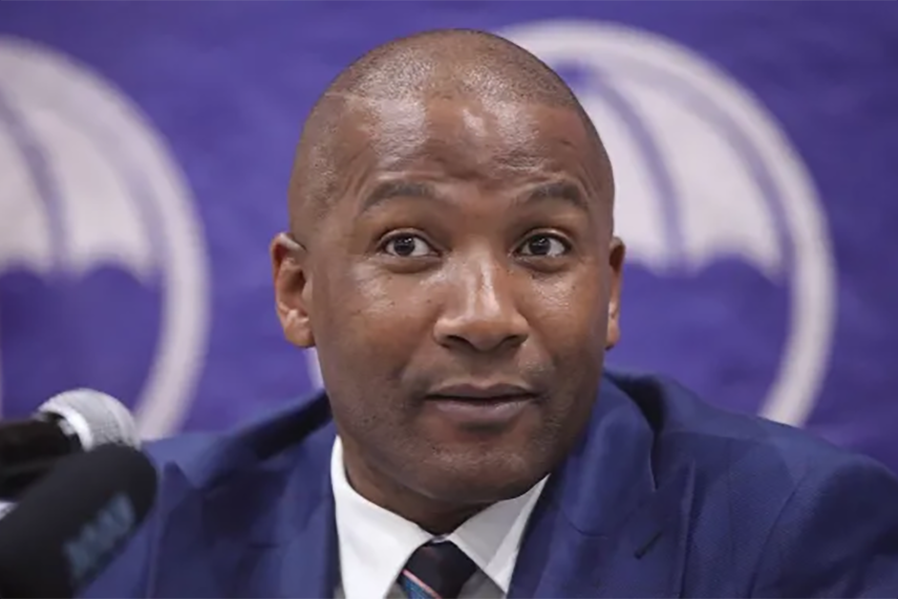
Duma Boko served the coldest political dish to end the 58-year dominance of the Botswana Democratic Party (BDP) and become the sixth president of the Southern African nation.
Mr Boko, 55, led the opposition Umbrella for Democratic Change (UDC) to a decisive 31-majority seat landmark in the National Assembly, leaving President Mokgweetsi Masisi reeling.
Mr Masisi's BDP, in power since independence in 1966, won only four parliamentary seats—the worst of the four parties that contested in the general elections—as of Friday afternoon. It will be replaced by the UDC.
Mr Masisi conceded and congratulated his opponent. He becomes the first president of the landlocked country to lead only one term and suffered the ignominy of overseeing BDP's rejection by the citizens.
The outgoing president admitted the party "had got it wrong big time."
"I will respectfully step aside and participate in a smooth transition process ahead of the inauguration," he said. "I'm proud of our democratic processes, and I respect the will of the people."
Botswana's Stellar Democracy
Botswana, a landlocked country in Southern Africa, has a landscape defined by the Kalahari Desert and the Okavango Delta. It is roughly the size of Kenya but with a population of just 2.6 million people.
Since 1966, the country has organized free and fair elections at least every five years.
Founder President Seretse Khama led the country for 13 years, and after his death in office on July 13, 1980, Quett Masire stepped up to lead for 17 years.
Masire, who died in 2017, left office in 1998, having added for the Batswana people a gift to their democratic flower by ringing in a two-term limit.
Festus Mogae would become the first president of Botswana to serve under the term limit, generously handing over the reins to the son of the party's founder, Ian Khama.
It was Mr Khama who brought Mr. Masisi along, but the two fell out dramatically, leading to cracks in BDP's steel armor that had stood the test of time.
President Masisi failed to balance the dramatic changes his government was ringing in the diamond-rich nation with the much-needed economic growth and employment opportunities, denting the BDP’s popularity.
Botswana's National Assembly is the sole legislative body of Botswana's unicameral parliament, which consists of the president and the National Assembly.
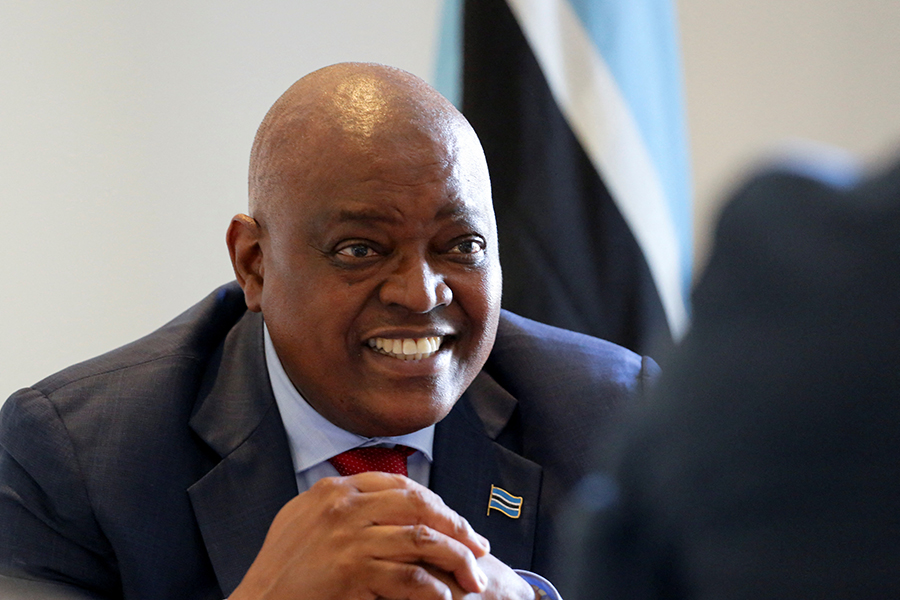
The party with the majority seats forms the government, and the kicks Masisi let BDP suffer in the polls were that costly as UDC coasted to a historic victory.
Uganda might be weighed down by a bloated parliament—whose size the average citizen needs Google to tell—but for Botswana, it is just 61 seats strong.
Thirty-one is the golden number in Botswana, and once Mr. Boko's UDC had hit that, it was game over.
The Botswana Congress Party was second with 14 seats at the time of writing this article, while the Botswana Patriotic Front, supported by former President Ian Khama, who split from the BDP, has so far managed to win five seats.
The parliament consists of the president and National Assembly—with 57 elected members. There is also a speaker of the assembly who is elected by the members of the assembly but does not necessarily have to be a member of the assembly themselves.
The Promises
Mr Boko has pledged to adopt a new economic strategy that creates well-paying jobs and distributes wealth that empowers all citizens.
He ran his campaign with a commitment to create 450,000 to 500,000 jobs within five years across new and existing sectors.
"Our plan is about jobs—more jobs—higher-paying jobs, diversified jobs, sustainable jobs," he said, stressing and stretching everything in his promise and pegging it on jobs.
Mr Boko promised to "dismantle constitutional dictatorship" by drafting a new constitution and ensuring access to affordable justice for all.
Riding on the coattails of a populace that appeared to say they were tired of the ruling party after 58 years of the same, Mr. Boko's every pledge appeared to strike the hearts of the voters.
He promised to create an equitable, dynamic, and diversified economy with an annual growth rate of 10%, set up a grant fund system for the informal sector and equity, and triple yields per hectare of cereals.
His government intends to distribute free sanitary pads to girls in both primary and secondary schools, construct 10,000 housing units in the first five years in office, and introduce a comprehensive health insurance scheme for all.
Mr Boko drew under his Umbrella six pillars, with the first focused on building a deep economy that offers each citizen an opportunity for a happy and fulfilled life, and the second pillar tackling democracy, government, and security.
In the third pillar, Mr Boko focused on land, housing, environment, climate change, and a green economy, while the fourth is centered around education, research, and human resource development.
The fifth pillar makes pledges for healthcare, social protection, and gender equality, and the sixth on international relations and global markets.
