

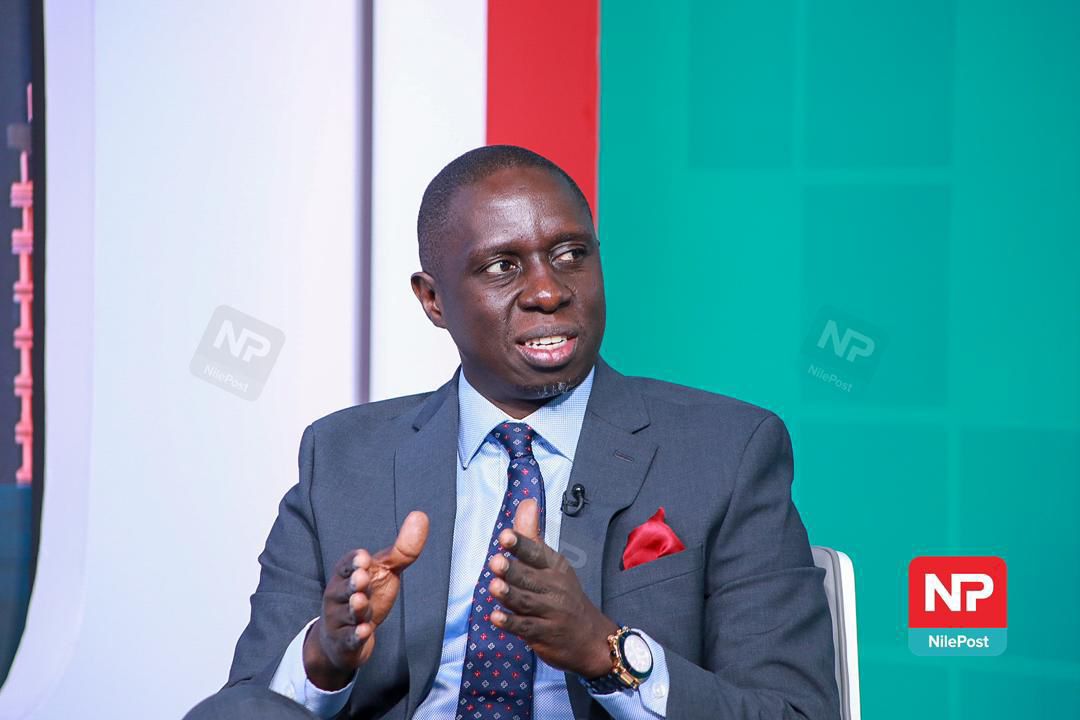
Outgoing Kampala Central Member of Parliament Muhammad Nsereko has weighed in on the contentious recount of votes in the Masaka City Woman Member of Parliament election, saying the dramatic reversal of results must have stemmed from a mathematical error.
Speaking during Sanyuka One on One on Wednesday, Nsereko—who also serves as President of the Ecological Party of Uganda (EPU)—questioned the legal and procedural basis of the recount that overturned the earlier declaration of National Unity Platform (NUP) candidate Rose Nalubowa as the winner.
“In a vote recount, the requester is responsible for proving their case beyond a reasonable doubt. From what has been presented to the public so far, this outcome must have arisen from a mathematical error,” he said.
Nsereko’s remarks come amid escalating legal and political tension following a controversial ruling by the Masaka Chief Magistrate’s Court, which nullified Nalubowa’s initial victory and instead declared National Resistance Movement (NRM) candidate Justine Nameere the duly elected Woman MP for Masaka City.
Nalubowa had been officially declared winner by the Electoral Commission on January 16, 2026, after polling 25,443 votes, ahead of Nameere who garnered 20,334 votes. Other contenders included Juliet Kakande of the Democratic Front with 6,343 votes, and independent candidate Sauya Nanyonga, who secured 6,196 votes.
Dissatisfied with the outcome, Nameere petitioned the court, citing irregularities in the tallying process. Central to her challenge was the claim that results from 11 of the 314 polling stations in Masaka City were excluded from the final tally, a discrepancy she argued materially affected the outcome.
On January 30, 2026, Chief Magistrate Albert Asiimwe ordered a full recount of votes from all polling stations, cautioning electoral officials to ensure the integrity of the ballot boxes presented before court.
The recount, conducted over the weekend, concluded on February 1, 2026, with the court announcing revised results that dramatically altered the outcome. According to the new figures, Nameere polled 25,502 votes, overtaking Nalubowa, whose tally dropped to 23,176 votes. Kakande’s votes fell to 6,136, while Nanyonga’s reduced to 5,921.
The ruling immediately sparked widespread criticism from legal experts and political observers, who argue that the recount violated clear provisions of the Parliamentary Elections Act, 2005, as well as long-standing judicial precedent.
Lawyers have pointed to Sections 52, 55, and 112 of the Act, which govern the timing of recount applications, the integrity and handling of ballot boxes, and prohibit courts from conducting parliamentary election disputes on weekends or public holidays.
Court proceedings revealed troubling irregularities: one ballot box reportedly had a broken seal, six were allegedly empty, and two contained votes exclusively for the NRM candidate. Despite these anomalies, Magistrate Asiimwe ruled that the disputed boxes be set aside, allowing the rest to be counted.
Legal practitioners argue that Ugandan courts have consistently held that a recount cannot proceed where ballot boxes are found to have been tampered with, citing at least six High Court decisions that uphold this principle.
“This decision ignores clear provisions of the Parliamentary Elections Act and long-standing judicial guidance on recounts involving tampered ballot boxes,” said lawyer Jude Byamukama.
In his ruling, Magistrate Asiimwe acknowledged the irregularities but defended his decision, arguing that adherence to what he termed outdated laws and earlier court decisions should not deny voters justice.
“I cannot deny the people of Masaka justice because of old laws and earlier court decisions,” he said.
The decision angered many of whom woke up to a complete reversal of results that had already been officially announced by the Electoral Commission.
Uganda Law Society Vice President Anthony Asiimwe warned that if the ruling is left unchallenged, it could open dangerous loopholes in the country’s electoral justice system.
“If this decision is allowed to stand, it creates a loophole that can be abused to distort election outcomes,” he said, calling for urgent judicial intervention.
Judiciary spokesperson Eremye Mawanda said the institution had not yet reviewed the ruling in detail but emphasized that legal remedies remain available.
“We have not yet analysed the decision as the judiciary. However, any party that is dissatisfied with the ruling is free to appeal to the High Court,” he said.
As debate continues to rage within legal, political, and public spheres, Nsereko’s remarks come in the wake of tightly contested races across the country during the January 15, 2026 general elections, which have sparked widespread criticism of the Electoral Commission (EC).
Several political actors and candidates have accused the EC of electoral injustices and unprofessional conduct, leading to a surge in court petitions seeking vote recounts and, in some cases, annulment of results.
