


Kampala has once again plunged into an intense political season as eight contenders line up for one of Uganda’s most competitive and symbolically significant positions: the office of Lord Mayor.
For over two decades, the capital city has stood as an opposition stronghold—an identity that took root in 1999 when Nasser Ntege Ssebagala’s victory disrupted the ruling National Resistance Movement’s (NRM) hold on city leadership.
Since the NRM assumed power in 1986, the ruling party has only claimed two wins in City Hall: Joseph Wasswa Ziritwawula’s 1987–1989 tenure and Christopher Iga’s term, which ended in 1997.
Ssebagala’s historic entry in 1998 not only altered the city’s political fabric but also ushered in a long-standing trend of opposition dominance that has persisted through successive elections.
Even after Ssebagala’s first term was cut short following his arrest in the United States, Kampala remained politically resistant to NRM leadership, with John Ssebaana Kizito serving until 2006 and Ssebagala later returning until 2011.
The enactment of the Kampala Capital City Authority (KCCA) Act in 2011 further reshaped the governance landscape, transforming the former city council into an authority with expanded powers.
Under this new structure, Erias Lukwago emerged as Lord Mayor and has since remained the face of Kampala’s political leadership.
Today, the city’s swelling population continues to grapple with deep-rooted challenges—from crumbling roads and blocked drainage systems to chronic waste mismanagement, disorganised public transport, and unresolved tensions surrounding street vending.
Many residents express frustration at what they describe as years of unmet promises and leadership that only surfaces vigorously during elections.
In Kisenyi II, Medard Turyahikayo lamented the rise in unemployment and its links to crime and early parenthood, urging incoming leaders to prioritise health equity for families in informal settlements.
Councillor Annet Acilah highlighted the urgent need for women’s empowerment through vocational skilling, stressing that many women in ghettos lack opportunities despite their willingness to work.
For small traders like Scovia Nabwiire, the daily reality is one of economic survival, made harder by flooding, high taxes, and the perception that elected leaders prioritise their own interests over those of voters.
These concerns set the tone for a competitive mayoral race, with each candidate presenting a distinct vision for a cleaner, better organised, and more inclusive Kampala.
Incumbent Lord Mayor Erias Lukwago (PFF) seeks a fourth consecutive term after having held the seat since 2011.
He frames his re-election bid around safeguarding public assets, championing the urban poor, and accelerating infrastructure development.
Highlighting his long-standing efforts to protect key markets such as Owino, Nakasero, Nakawa, Bugolobi, Nateete, and Rufula from what he calls selfish encroachment, Lukwago pledged to continue serving as a shield for vulnerable communities.
His infrastructure agenda includes the upgrading and reconstruction of more than 325 kilometres of city roads, with targeted improvements along Mukwano Road, areas around Kitgum House, and the Oasis Mall roundabout.
Lukwago has criticised the high cost of road construction under KCCA and vowed to enforce strict cost controls that significantly undercut current expenditure.
He also intends to expand street lighting by installing 25,000 new lights in crime-prone neighbourhoods through partnerships with the French Development Agency and the national government.
On waste management, Lukwago proposes decommissioning the overburdened Kiteezi Landfill, establishing a modern replacement site in Buyala, assigning each parish its own garbage truck, and pushing for compensation for residents affected by past Kiteezi landslides.
His broader agenda also includes expanded classroom construction, improved sanitation facilities, upgraded teacher housing, full hospital status for all eight KCCA health centres, extensive drainage works, modernised transport, enhanced security infrastructure, and investments in sports and cultural heritage.
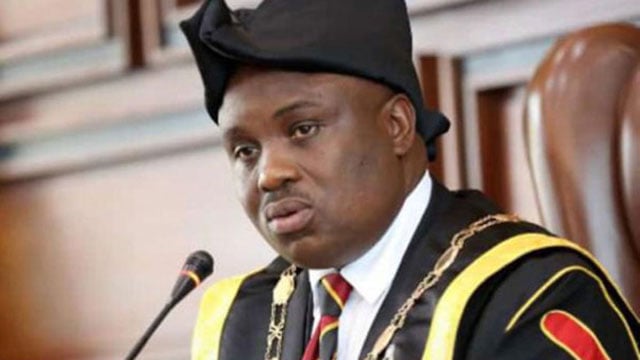
Nakawa East Member of Parliament Ronald Balimwezo Nsubuga (NUP), who has stepped aside from Parliament to seek the Lord Mayor seat, says Kampala’s central crisis is the city’s overwhelming garbage problem, arguing that the capital “is smelling all over” due to inconsistent waste collection.
Balimwezo is pushing for a comprehensive service-delivery agenda that includes revamping decayed road infrastructure, addressing flooding by fixing drainage systems, and ensuring that property tax revenue directly benefits communities through improved streetlighting, roads, drainage, and garbage collection.
He also prioritises reorganising public transport—including boda bodas and taxis—and envisions the construction of 300,000 affordable housing units for low-income residents.
His manifesto emphasises each parish having a government primary school, KCCA Health Centre IIs elevated to Health Centre IVs, restoring public trust in KCCA, strengthening community engagement, improving education and sports development, and rebuilding the relationship between the Authority and residents.
Ibrahim Kasozi (FDC) brands himself as a reform candidate committed to building a city anchored on inclusivity, institutional integrity, and climate resilience.
He pledges to support small businesses through microfinance access, training, and streamlined licensing.
His urban development plan includes significant upgrades to roads, sidewalks, cycling lanes, street lighting, and storm-water systems.
Kasozi emphasises regular waste collection and proposes recycling and waste-to-energy innovations. His manifesto also includes expanding access to clean water, rehabilitating schools, strengthening teacher development, and investing in libraries, cultural centres, and museums.
He promises a transparent governance model featuring a public budgeting portal, citizen-friendly budget summaries, an independent performance watchdog, weekly progress briefings, and pilot projects to improve mobility, drainage, lighting, and neighbourhood cleanliness.
Former Makerere University Guild Speaker Jothan Yamureebire Burobuto (Independent) has pitched one of the most technology-focused manifestos in the race.
He promises free Wi-Fi across all higher institutions of learning and envisions Kampala as a model digital city. He proposes establishing a KCCA Bank to provide low-interest loans to traders and foster financial inclusion, especially for informal sector workers.
Yamureebire also advocates transitioning to electric boda bodas, strengthening public sensitisation on waste management, providing free transport for senior citizens over the age of 70, and offering free medical care in KCCA facilities.
He pledges at least three ambulances per division, decentralised fire services, and free sanitary pads in KCCA-run schools.
A lawyer by profession, he seeks to revitalise youth centres, libraries, and recreational spaces such as Nsambya Youth Sharing Hall while encouraging younger Ugandans to take charge of their city’s future.
Former Kampala Woman legislator Nabilah Naggayi (DP) returns with a platform focused on protecting vulnerable children, supporting street vendors, and strengthening coordination between political and technical arms at KCCA.
She proposes upgrading remand homes to include vocational training and rehabilitation programmes for street children and creating safe spaces for working mothers who lack childcare options.
Naggayi aims to restore order in the informal economy by reintroducing organised vending systems where traders have designated spaces and identification numbers.
Her plan includes vigorous local and international lobbying for additional city resources, modernising sanitation equipment and fire services, and reinforcing cooperation among city leaders to ensure efficient service delivery.
Moses Kizito Nsubuga (NRM) enters the race with a pledge to strengthen Kampala’s night economy through extended work shifts in government and private institutions.
He argues that round-the-clock operations will ease traffic congestion, improve service delivery, create employment, and enhance productivity.
Kizito also promises major improvements in the health sector, free education and meals in all government-run city schools, elimination of garbage collection fees, free housing for both the elderly and youth, better remuneration for road cleaners, and a revitalised approach to education and health service provision.
Beatrice Nambi Mao (DP), wife to party president and Minister for Justice and Constitutional Affairs Norbert Mao, promises a new brand of disciplined and cooperative leadership.
She vows to eliminate the political divisions and fights that have characterised City Hall, asserting that Kampala—Uganda’s “living room”—requires dialogue-driven governance rooted in unity and responsibility.
Nambi draws on her decade-long involvement in supporting local artisans and promoting East African products abroad as proof of her commitment to grassroots communities.
Her manifesto focuses on improving public transport, enhancing road construction and connectivity, and ensuring that all construction projects follow approved plans.
She proposes abolishing property taxes in favour of taxing idle city land, optimising land use, promoting orderly development, expanding e-governance, creating innovation hubs, opening public spaces, supporting cottage industries, skilling youth, implementing universal healthcare, reducing noise pollution, institutionalising the informal economy, expanding urban agriculture, enhancing tourism, and improving WASH and waste-management systems.
Independent candidate Eddy Bazira is targeting Kampala’s youth population with promises of free internet across the city and the establishment of job incubation centres in every parish.
His campaign highlights improvements in education, better health facilities, and expanded support for young talent as the cornerstone of a modern, upward-moving capital.
As the race intensifies, Kampala stands at a decisive moment. Residents are looking for leaders who can address entrenched problems—flooding, garbage, unemployment, disorganisation, and infrastructure decay—while steering the capital toward a cleaner, safer, and more equitable future.
The weeks ahead will reveal not only the political appetite of Kampala’s electorate but also which candidate they trust to deliver a new vision for the city.
In the last election, Erias Lukwago won decisively with 194,592 votes against Nabilah Naggayi Sempala’s 60,082.
Whether he or any of the fresh contenders can capture the city’s confidence this time remains to be seen.
