
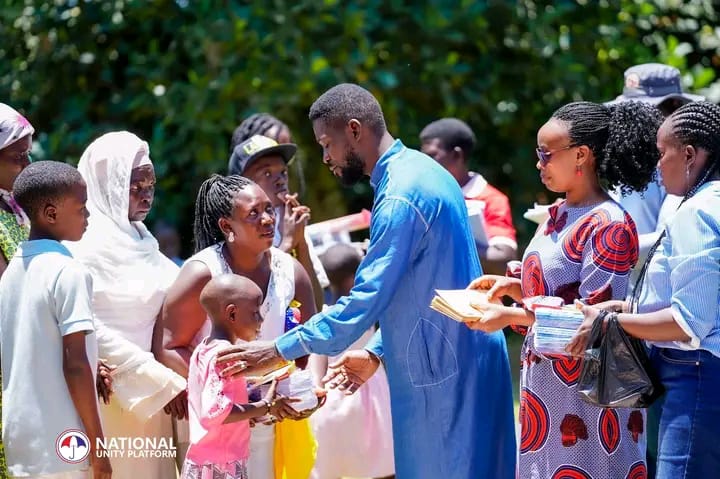
As Ugandan schools reopen, many children of political detainees face uncertainty and hardship. National Unity Platform leader Robert Kyagulanyi, also known as Bobi Wine, has stepped in to provide school fees, supplies, and emotional support, offering a lifeline to families left struggling by the imprisonment of their loved ones.
As the joyous sound of returning students echoes across Uganda, a different silence lingers in the homes of families whose loved ones remain in political detention.
For these families, the start of a new school term is shadowed by the absence of parents and the burden of financial struggle.
In a show of solidarity, Bobi Wine has launched an initiative to support the education of children whose parents are imprisoned for political reasons.
At his home in Magere, the atmosphere was both hopeful and solemn. Children, some shy and others animated, gathered with their guardians as the NUP leader distributed essential supplies.
Books, pens, soap, sanitary pads, and even loaves of bread were provided, alongside financial contributions to cover school fees.
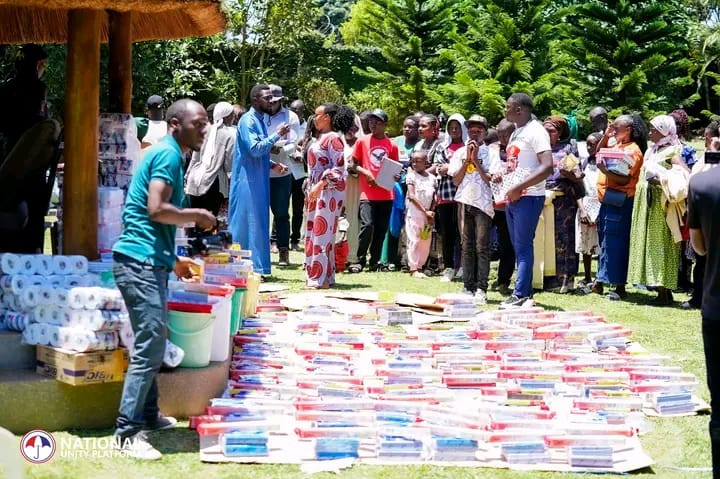
“We are here to stand with these children and their families,” Kyagulanyi told the gathering.
“This is our collective responsibility—to ensure their well-being and fight for the justice their parents deserve.”
The initiative highlights the toll political detention has taken on ordinary Ugandans. Families have lost income, stability, and security, while children often struggle with trauma and the disruption of their education.
Bobi Wine framed his intervention as both practical and symbolic: immediate relief for families, and a declaration that they will not be abandoned.
Parents expressed deep gratitude. Christine Zarwango, whose husband has been detained for three years, broke down as she described her struggle to provide for her children.
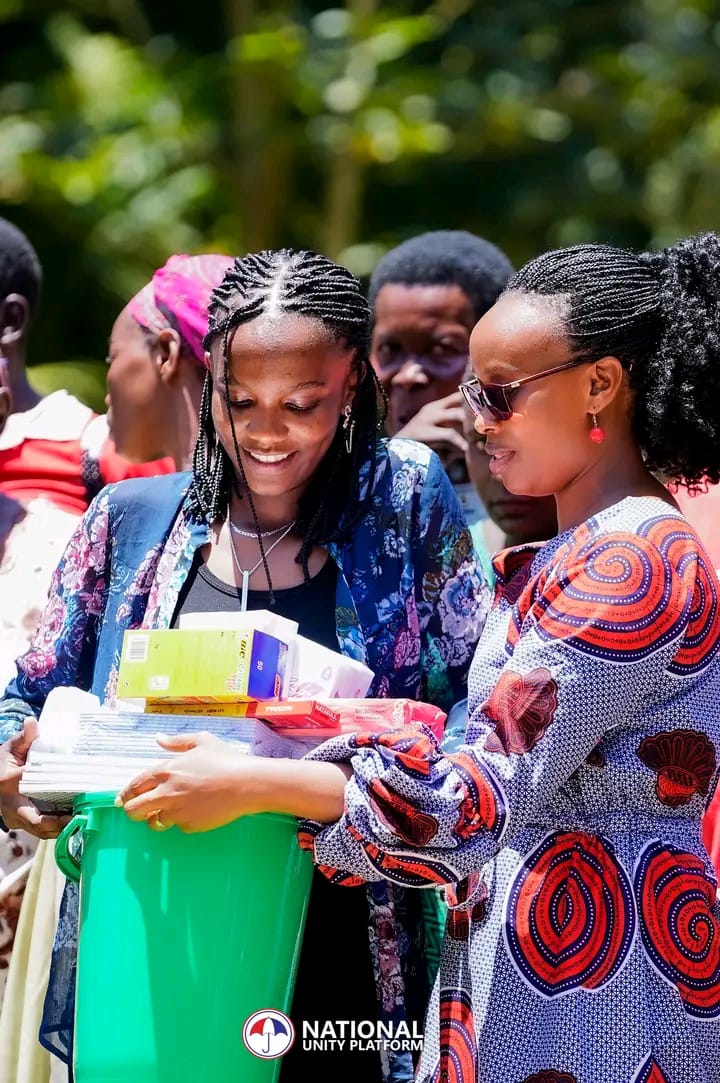
“I lost my job to care for them, and the situation became unbearable. This support is a miracle for us. I can finally breathe knowing that my children can continue their education.”
Others echoed the sentiment. “This is a clear indication that we are not alone,” said Joan Nakabugo, whose niece was excited to receive school supplies.
“They have not abandoned us, and this support makes a huge difference.”
According to NUP Secretary General David Lewis Rubongoya, the number of children needing assistance has risen to 280.
He praised the generosity of individuals and groups who contributed to the initiative but warned that demand continues to grow.
“The needs are great,” Rubongoya said. “Every contribution, no matter how small, makes a difference in the lives of these children.”
The event was not only about material aid but also about inspiration. Kyagulanyi urged children to remain focused on education, calling it their pathway to a better Uganda.
“Stay in school, learn, and prepare to build the country we all dream of,” he told them.
To parents, he offered words of encouragement: “Your resilience in the face of hardship is a testament to your belief in a better future. We will not let you down.”
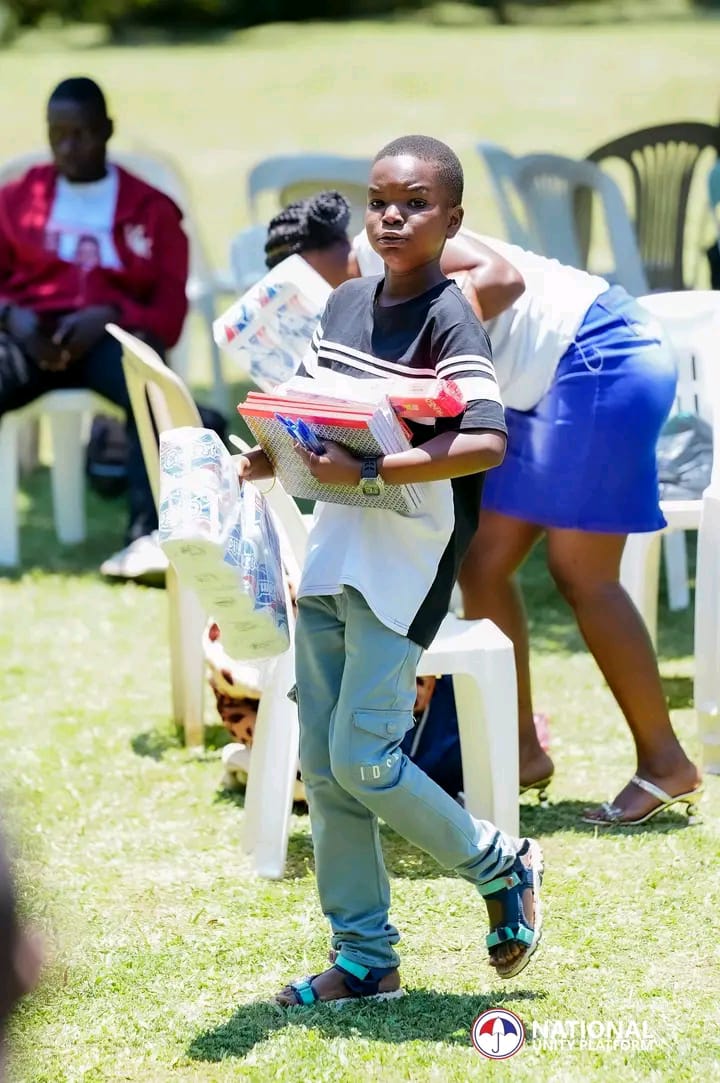
The initiative has been hailed by volunteers and donors as a vital intervention. It underscores the NUP’s message of justice, compassion, and community responsibility while drawing attention to the broader political climate that continues to fuel detentions and hardship.
As children clutched their new notebooks and pens, their laughter mingling with the chatter of guardians, the moment symbolized resilience amid adversity.
The reopening of schools became not just a reminder of loss, but also of solidarity and hope.
Kyagulanyi has vowed that this will not be a one-off effort. NUP intends to continue supporting detainees’ families while pressing for their release.
But as the numbers of affected children grow, the party has appealed for broader public support to sustain the initiative.
The start of a school term should be a time of excitement, not sorrow. By stepping in to help, Bobi Wine and his party have sent a clear message: the plight of detainees’ families cannot be ignored.
The ringing of school bells this term carries not just lessons, but a renewed call for justice, solidarity, and hope for Uganda’s future.
