

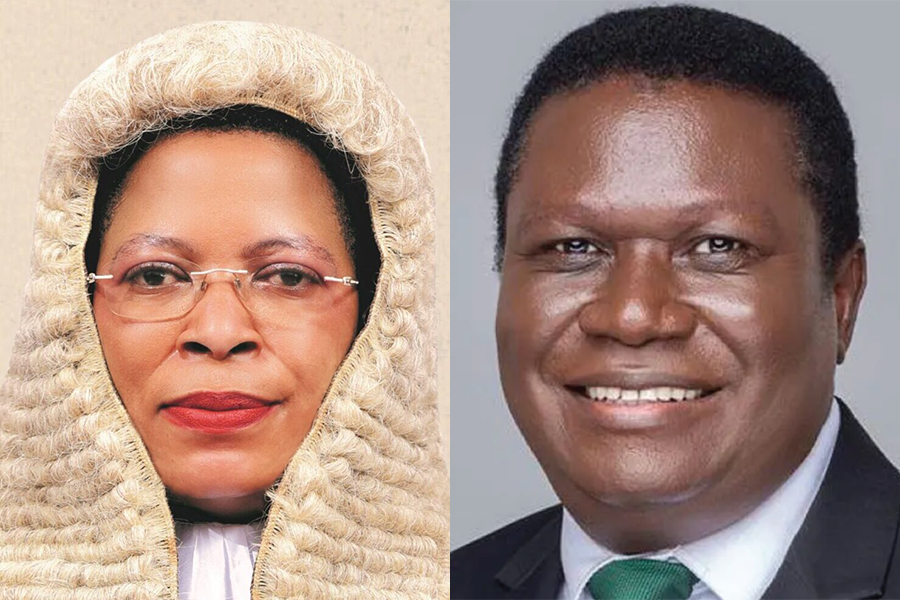
Democratic Party (DP) President-General Norbert Mao recently signalled his ambition to wrestle the Mace from Anita Among in the 12th Parliament. Mao, who won the Laroo-Pece Division parliamentary seat in Gulu City in the January 15 elections, is an astute legal mind, and few would doubt his capacity to lead the House effectively.
But competence alone does not determine the timing of leadership in Uganda’s political system.
Over the last 20 years, an unwritten political creed has guided the succession of Speakers: a tenure of roughly ten years or two terms. Anita Among has completed her first term, during which she has steered Parliament in a manner that largely aligns with President Museveni’s political interests. Introducing a new leadership dynamic now, however competent, risks destabilising a system that has found a measure of stability after years of turbulence.
Mao himself has acknowledged the DP–NRM cooperation agreement and the strategic advantage it confers. Yet, pursuing the Speakership at this moment contradicts the practical interpretation of that accord: the NRM creed of “jumping the queue” should not be attempted lightly. Even with the support of some MPs, a challenge now is likely to encounter resistance and could cause more harm than benefit.
Analysts observing the 11th Parliament note the steady hand of Speaker Among and Deputy Speaker Thomas Tayebwa in ensuring cohesion, procedural predictability, and legislative productivity. Following the death of Speaker Jacob Oulanyah, the House faced a period of vulnerability. Against this backdrop, Among and Tayebwa implemented a management style that emphasised consensus-building over confrontation, resulting in a calmer chamber, fewer procedural breakdowns, and increased legislative output.
Committees have become more active, oversight has gained visibility, and government business has flowed with fewer interruptions. President Museveni himself has publicly praised this approach, contrasting it with prior leadership styles that were more office-bound. Beyond the chamber, Among’s engagement in nationwide oversight of infrastructure and constituency matters has further demonstrated her strategic value to both Parliament and the Executive.
Critics may point to isolated issues during Among’s first tenure, but her overall record reflects the kind of continuity and predictability the system needs. Mao’s ascent now would not only challenge an effective operational rhythm but could also fragment parliamentary unity. Yes, persistence might eventually yield victory, but the political and institutional cost could be significant.
History, political wisdom, and the NRM’s own approach to succession suggest that restraint can be as valuable as ambition. The DP leader would do well to follow the spirit of the cooperation agreement: consolidate influence, build relationships, and wait for the appropriate moment to assume leadership without disrupting the machinery that currently functions smoothly.
The lesson is clear. Leadership in Uganda’s Parliament is not merely about who can speak well or who has legal expertise. It is about timing, alignment with broader political strategy, and respecting established norms that maintain institutional stability. For Mao, now is the time to prepare, not to contest, and to ensure that when he eventually rises, he does so on a foundation of consensus rather than conflict.