

Some investors and residents living or constructing in wetlands have remained in place, while others have been evicted as the National Environment Management Authority (NEMA) intensifies its crackdown on wetland encroachment across Uganda.
Thousands of people now face uncertainty, fearing the loss of homes, businesses, and livelihoods as environmental authorities step up enforcement. NEMA, however, maintains that restoring degraded wetlands is critical to preventing floods, pollution, and long-term ecological decline.
While critics have condemned the operations as harsh and disruptive, the authority defends them as long-overdue interventions necessary to protect fragile ecosystems and safeguard public safety.
Scientists have repeatedly warned that continued destruction of wetlands could worsen urban flooding and trigger wider environmental disasters.
NEMA Executive Director Dr Barirega Akankwasah said the operations are firmly grounded in both the Constitution and the National Environment Act. He argued that environmental protection is not optional but a constitutional duty binding both the state and citizens.
Excerpts;-
What is the precise legal grounding under the National Environment Act for the April 2, 2026 eviction order targeting illegal wetland encroachers and occupants?
The Constitution of Uganda under Article 237, Article 39, and the Directive Principles of State Policy obligates the state to protect and conserve the environment for the good of all citizens. Therefore, environmental protection is not optional; it is a constitutional obligation.
At the same time, every citizen has a duty to maintain a clean and healthy environment. Unfortunately, over time, some individuals have breached that obligation by unlawfully encroaching on sensitive ecosystems such as wetlands, forest reserves, riverbanks, and lakeshores.
Government, in fulfilling its constitutional mandate, must remove such encroachments in order to protect the environment for the benefit of the people. The legal basis for these operations is not only constitutional but is also clearly outlined under the National Environment Act, CAP 181, and several related laws.
In fact, it is a criminal offence under the National Environment Act for any person to encroach on a wetland, develop in it unlawfully, or dump materials there without approval. What we are doing is simply enforcing the law.
This is not a new exercise. Last year, we conducted several operations across the country to restore wetlands that had been encroached upon. Around November last year, affected communities requested more time to reorganize and leave voluntarily. Government accepted those requests and scaled down operations to allow people to relocate peacefully.
That period has now elapsed, and government believes enough time was given. That is why enforcement operations have resumed.
Is there scientific data informing the crackdown today?
Yes. We cannot afford to wait for disaster before taking action. We have already seen devastating floods in urban areas. In Nairobi, for example, more than 83 people lost their lives due to flooding.
Wetlands are critical ecosystems that absorb excess water and regulate flooding. When they are degraded, the consequences are severe. So, this enforcement is preventive. We are acting now to avoid future disasters, loss of life, destruction of property, and environmental collapse. The objective is to protect the very people currently living in these vulnerable areas.
Uganda has suffered significant biodiversity loss over the years. Is that damage reversible?
Absolutely. Environmental recovery is possible, and Uganda has already demonstrated that.
If you look at wildlife conservation, by the late 1970s and early 1980s, political instability had pushed many species to the brink of extinction. Mountain gorillas had reduced to fewer than 200 individuals. Elephant populations had dropped to about 2,000 animals.
Today, elephant numbers are above 8,000, while mountain gorillas have risen to more than 500. In fact, the International Union for Conservation of Nature downgraded mountain gorillas from “critically endangered” to simply “endangered.”
The same applies to forest cover. Around 2015, Uganda’s forest cover had dropped to about 9 percent of the country’s land surface. Through combined efforts by government agencies, citizens, the private sector, and conservation stakeholders, forest cover has increased to about 13 percent.
Wetlands are also recovering. Wildlife species are returning, and even rhinos are being reintroduced and successfully breeding again. So, to answer your question, environmental restoration is possible, and it is already happening.
Some critics argue that these operations have been harsh on affected communities. Where do you draw the line between protecting the environment and protecting human rights?
Protecting the environment can involve temporary pain, but the long-term benefits outweigh that pain. Nobody wants hardship, but sometimes difficult decisions are necessary for the greater good. For example, childbirth is painful, but it results in joy. Surgery may be painful, but it ultimately heals.
In the same way, removing encroachment may cause temporary disruption, but it is intended to protect lives, livelihoods, and ecosystems in the long run.
That said, we try as much as possible to minimize the pain. We issue notices before enforcement. We engage communities. We give people time to relocate voluntarily. As I mentioned earlier, last year many communities requested additional time, and government granted it. The aim is to ensure operations are conducted humanely and with minimal disruption.
Some people believe this crackdown is being driven by donor pressure rather than environmental necessity. Is that true?
Absolutely not. Uganda is a sovereign country. We do not receive instructions from donors regarding environmental enforcement. In fact, Uganda ranks among the best-performing countries in wetland conservation globally. In Africa, Uganda is among the top countries in wetland conservation, and globally we are highly ranked as well. So, we are not under pressure to impress anyone. This is a national obligation that dates back to the promulgation of the 1995 Constitution.
Uganda’s Vision 2040 clearly states that the country must pursue sustainable development. Sustainable development cannot exist without environmental protection. As President Museveni often says, environmental protection is a struggle for survival. Humanity cannot survive without the environment.
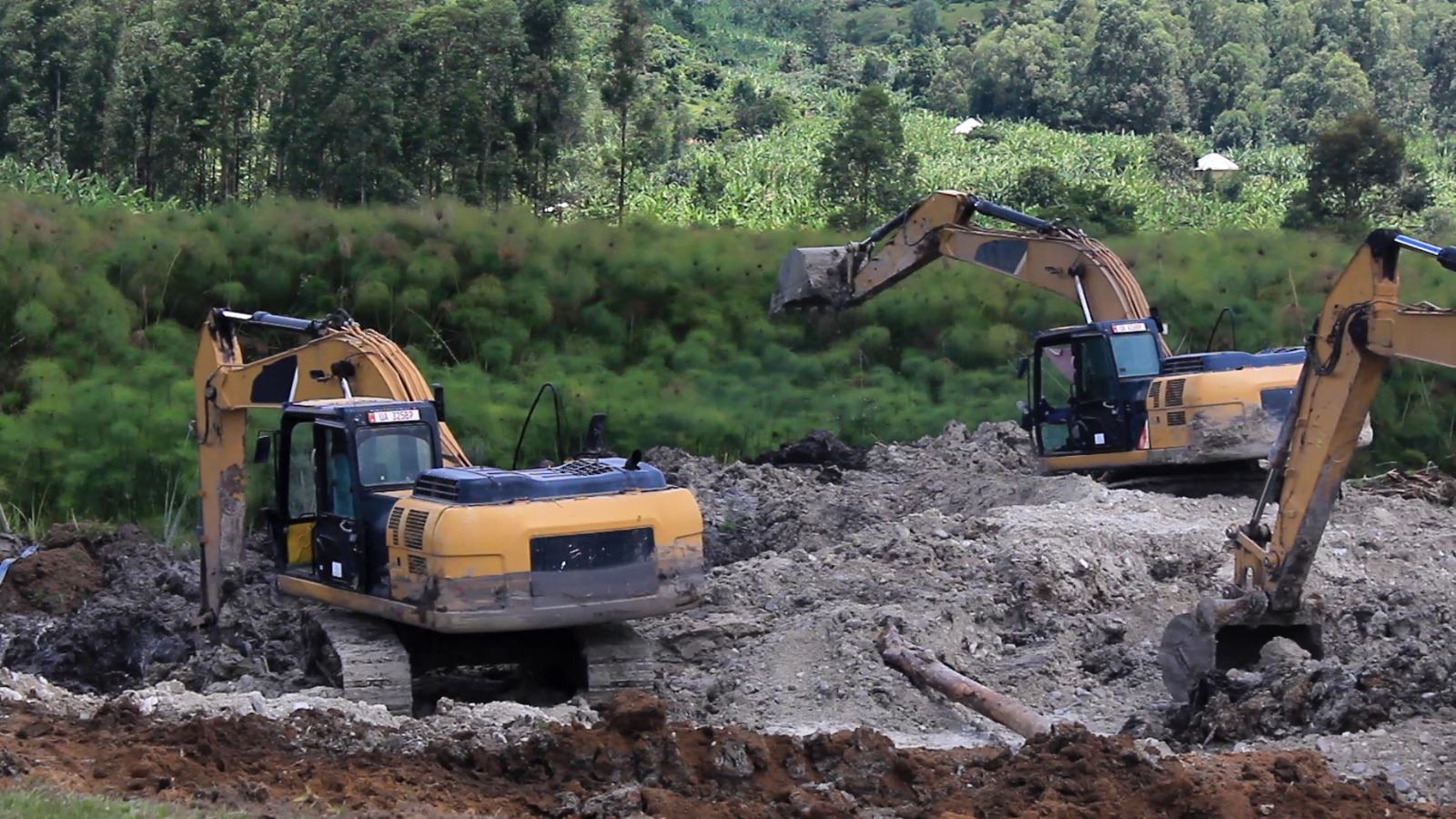
Has NEMA quantified the total acreage of illegal wetland encroachment, and how much has already been restored?
Uganda’s total wetland coverage currently stands at 13.9 percent of the country’s land surface. Of this, 9.3 percent remains fully intact. We previously had only about 8.9 percent intact wetland coverage, but through restoration efforts, we have increased that to 9.3 percent.
So far, we have restored approximately 96,000 hectares of wetlands. However, there is still work to be done because about 4 percent of Uganda’s wetlands remain degraded.
We have mapped all wetlands across the country. We know which areas are degraded and which remain intact, so our interventions are data-driven.
Critics online claim that NEMA targets ordinary citizens while wealthy investors are spared. Is enforcement selective?
No, that is not true. Law enforcement is based entirely on whether someone has violated the law. It does not matter whether you are rich or poor, an investor or an ordinary citizen. You cannot arrest or prosecute someone who has not broken the law because the courts would dismiss the case.
The claim that we target poor people is false. Recent operations have affected factories, commercial establishments, and wealthy developers. Poor people do not own factories or fleets of heavy trucks.
We have demolished illegal structures in areas such as Lubigi and Munyonyo regardless of who owned them.
What determines where enforcement operations are concentrated?
These are targeted operations because wetland encroachment is nationwide and we do not have the capacity to operate everywhere at once. According to our assessments, eastern Uganda has the highest levels of encroachment, followed by central Uganda, while western Uganda has the least.
We prioritize ecosystems facing the greatest threat of collapse. Areas such as Lubigi and other critical wetlands receive urgent attention because the level of degradation there is severe. The nature of encroachment also matters.
Agricultural encroachment may only require notices ordering people to harvest their crops and vacate. But heavily built-up urban wetlands may require stronger enforcement measures. So, the level of force depends on the level of threat and the urgency of restoring the ecosystem.
Wetlands such as Lubigi appear to receive greater attention. Do they pose higher ecological threats?
Yes. Most urban flooding occurs because cities have extensive paved surfaces and limited green areas. When rain falls in urban areas, water moves quickly across concrete surfaces instead of being absorbed into the ground.
Wetlands help absorb and regulate this water. Urban wetlands also help filter pollution, improve air quality, and provide habitats for biodiversity. That is why wetlands in cities such as Kampala and Jinja are especially important.
During enforcement operations in Kampala, which institution takes the lead NEMA or KCCA?
NEMA is the principal agency responsible for environmental management in Uganda, but we work through lead agencies. Wetlands are managed on the day-to-day basis by the Ministry of Water and Environment and local governments, including KCCA in Kampala.
When joint operations are conducted, NEMA coordinates and supervises them. However, KCCA also has legal authority to conduct its own enforcement operations independently.
How much notice do wetland occupants receive before eviction?
The law requires us to issue a 21-day notice through restoration orders or stop notices. Within those 21 days, affected persons have several options. They may voluntarily remove the encroachment, request more time to relocate peacefully, or appeal the order either to NEMA or to court.
If none of those steps are taken and the notice period lapses, the person commits another offence for failure to comply with a restoration order. At that point, the authority has powers to remove the encroachment at the offender’s cost.
Critics say NEMA is demolishing structures.
For us, the focus is not demolition but restoration. In some cases, what is removed may not even be a building. It may be soil dumped in a wetland or other forms of degradation. Our objective is to restore the wetland so it can regenerate and perform its ecological functions again.
If there are thousands of affected people, are notices issued individually or through public announcements?
The law requires individual service of restoration orders. Before enforcement, we conduct sensitization meetings with local leaders and communities. We profile the affected persons and identify the exact locations of encroachment. Each restoration order is issued to a specific individual and is accompanied by maps indicating the affected area in relation to gazetted wetland boundaries.
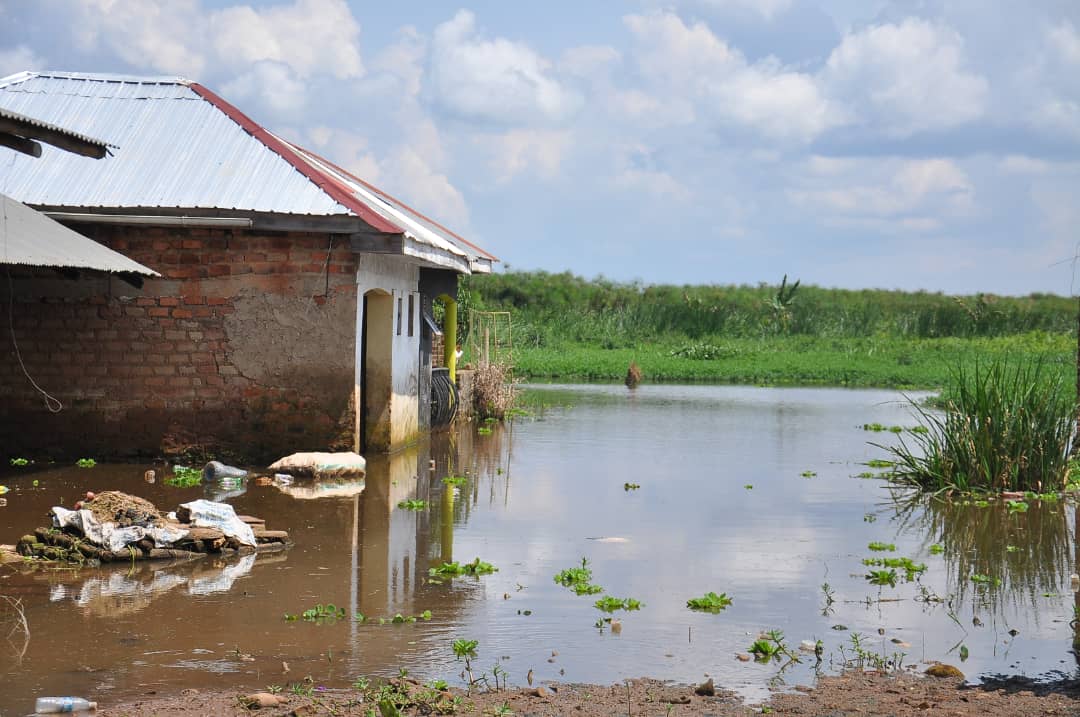
Why do some factories and fuel stations remain intact while neighbouring buildings are demolished?
Some developments went through the legally required approval processes and obtained Environmental and Social Impact Assessment certificates. If a project was lawfully approved, it cannot automatically be classified as illegal. The law determines which structures are lawful and which are not. Enforcement targets those that violate the law.
What about controversial developments such as those linked to the former Ssese Gateway Beach project?
That case involved a long process. The developer initially submitted plans based on the original size of the property. However, rising water levels had submerged part of the land.
Our position was that once the lake reclaimed that land, it became part of the lake and could not be developed. The developer was required to revise the plans and adjust construction boundaries accordingly. No illegal development was allowed on the reclaimed lake area.
Are affected persons compensated or assisted with relocation?
No. Wetland encroachment is a criminal offence under the law. Government cannot compensate individuals for engaging in illegal activities. Parliament cannot allocate public money to reward people who violated the law.
In fact, encroachment carries penalties of up to 12 years imprisonment and fines of up to Shs600 million. This is fundamentally a law enforcement process. While we try to be humane and allow sufficient time, compensation is not provided for illegal occupation of protected ecosystems.
Wetland encroachment has happened under the watch of the authority. What exactly is NEMA’s role before encroachment takes place?
I want to answer that question directly because many people ask, “Where was NEMA?” The law assumes that every citizen is a reasonable person who must comply with the law. That is why, even in criminal jurisprudence, ignorance of the law is not a defence.
Whether someone knows the law or not, they are still bound by it. In fact, many of the people encroaching on wetlands know very well that what they are doing is illegal. That is why they backfill wetlands at night using trucks under the cover of darkness.
If someone dumps soil in a wetland at midnight instead of during the day, it clearly shows they understand they are committing an offence. The responsibility of law enforcement agencies is not to police people before they commit offences.
The law expects citizens to obey it by default. Courts do not entertain cases against people before an offence has been committed. So, before someone commits an offence, there is no case against them. The issue only arises once the law is broken.
Therefore, the question should not only be, “Where was NEMA?” but also, “Where was the citizen who knowingly committed the offence?” Every Ugandan has a constitutional duty to protect the environment.
But some people argue they may not always know where a wetland begins or ends.
A wetland is a wetland. In many cases, you can physically see it. A wetland is defined as an area that is permanently or seasonally flooded with water. Unlike forests, where boundaries may sometimes be unclear, wetlands are naturally identifiable.
People often claim they did not know, yet they first bring in truckloads of soil to backfill the area. If it were truly dry land, why would anyone need to dump soil there? And again, why is this usually done at night? Why do the trucks move at odd hours?
It is not true that people do not know. Wetlands are already gazetted under the law, but nature itself also defines them clearly. Human beings can physically identify wetlands with their own eyes even before legal gazettement.
Government has gone further by surveying wetlands and, in some areas like Lubigi, even placing physical boundary pillars. Yet some people deliberately go beyond those markers.
So environmental protection is not solely NEMA’s responsibility. Citizens themselves are the primary stewards of the environment.
Who are the biggest culprits’ investors or ordinary citizens?
Encroachment cuts across all categories. If you go to some areas in Mbarara, you will find mostly local encroachers. In places like Sheema, we have carried out operations where there are no foreign investors at all. At the same time, in urban wetlands such as Lubigi, both investors and ordinary residents have encroached.
For industries, many investors were initially allowed into lowland areas under government industrialisation policies. Government wanted industries to create jobs, increase incomes, and generate tax revenue.
In places such as the Namanve Industrial Park, some developments were established in lowland areas with government approval. So, in some cases, the issue involves historical policy decisions and cost-benefit considerations made by government.
During crackdowns, what humanitarian safeguards does NEMA put in place?
First, we issue notices before enforcement. Second, we do not demolish structures while people are inside them. We conduct operations as humanely as possible.
Third, we allow additional time where necessary. If someone writes to us requesting more time to relocate peacefully, we consider it.
That is why last year we suspended some operations around November after communities requested more time to vacate. However, some people misuse that goodwill. They promise to leave but remain in the wetlands and continue construction activities.
Scientifically, can you demonstrate that the operations are producing results?
Absolutely. Apart from reclaiming significant portions of wetland coverage, we have conducted assessments in restored areas and confirmed that ecosystems are regenerating.
You do not need to travel far to see the results. Just visit Lubigi or Munyonyo. You will see wetlands regenerating, vegetation returning, birds coming back, and biodiversity recovering. These are visible and measurable environmental improvements.
Some developments, like the Auto Spa in Munyonyo, were clearly not constructed overnight. Why didn’t NEMA intervene earlier?
I generally avoid discussing specific cases, but the Auto Spa issue is unique. That development was approved years ago during a government-led wetland boundary rationalisation exercise conducted between 2003 and 2018.
At the time, government assessed certain sections of wetlands in Munyonyo and concluded that some areas had already been so extensively degraded that restoring them was no longer feasible.
The process involved technical studies and Cabinet discussions. Eventually, government decided that some sections classified as “beyond recovery” would be formally degazetted or “vanquished” to allow controlled development.
The Auto Spa area falls within one of those sections that had already been approved for development.
So, government effectively decided that some wetlands could no longer be recovered?
Yes. After technical assessments, government determined that certain wetland sections had been irreversibly transformed. The cost of restoring them would far outweigh the environmental benefits. The Munyonyo stretch, including areas near Auto Spa and parts occupied by other developments, was among those assessed. Government then redrew wetland boundaries and established new limits beyond which development could not proceed. Auto Spa sits near the edge of that revised boundary.
Critics say wealthy business people benefited from that process while ordinary citizens are now facing eviction.
It was not about benefiting wealthy individuals. The process affected entire communities and trading centres. For example, areas such as Owino Market and parts of Nateete were once wetlands too. Many densely populated settlements in Kampala were originally wetlands.
Government had to assess whether restoring those wetlands was practical or whether the social and economic costs would be too high. The same process happened across Wakiso and Kampala districts, including areas such as Bugolobi and parts of Ministers’ Village.
Government conducted a cost-benefit analysis and concluded that in some cases, restoration was no longer realistic.
Five years from now, what measurable targets has NEMA set for wetland restoration?
Our goal is to restore all wetlands currently under threat. Uganda’s intact wetland coverage currently stands at about 9.3 percent of the country’s land surface, yet the total wetland coverage should be about 13.9 percent. Our target is to recover the degraded portion and restore the country closer to the full 13.9 percent. That is why these operations are continuing nationwide.
What message do you have for people currently occupying wetlands?
Anybody who knows they are occupying a wetland should take advantage of this opportunity and leave peacefully before enforcement reaches them. Whether you have received a restoration order or not, it is better to act proactively and avoid unnecessary disruption.
The operations are ongoing and will cover the entire country. We do not want to disrupt livelihoods, but we must enforce the law and protect the environment. Article 17 of the Constitution clearly states that it is the duty of every citizen to protect the environment.
This is being done in the public interest to protect the water people drink, the air they breathe, the land where food is grown, public health, biodiversity, and the future of the country. Ultimately, environmental protection is about safeguarding human survival itself.
