
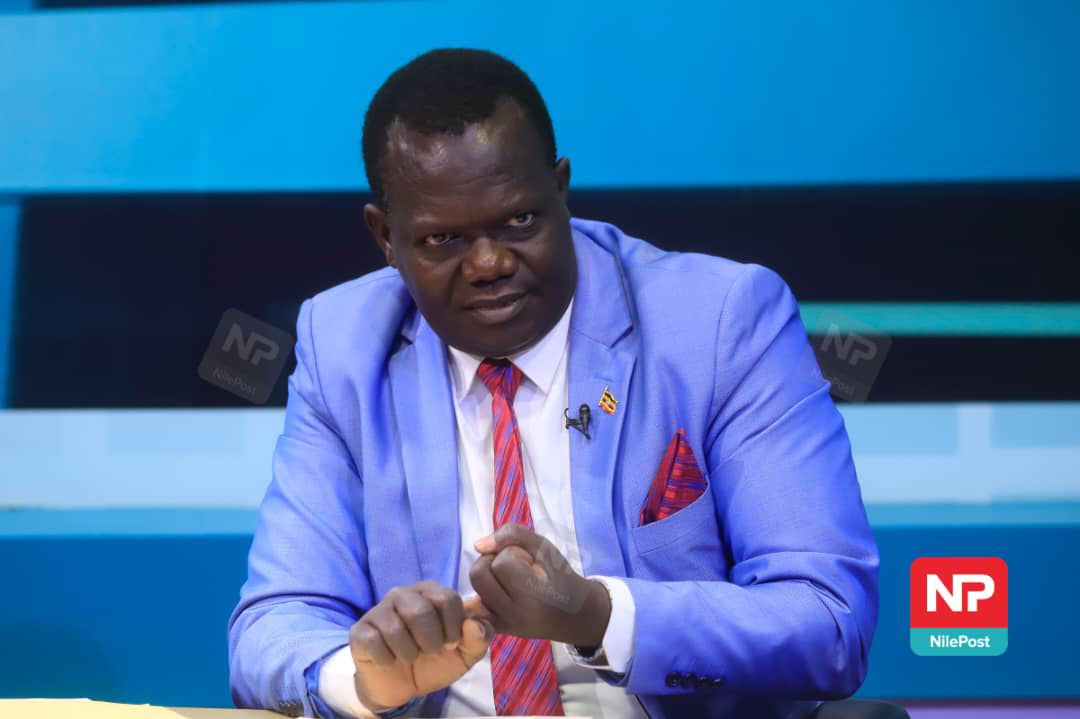
The Forum for Democratic Change (FDC) has faced growing internal divisions and political pressure in recent years, challenges that have tested its cohesion and influence on Uganda’s opposition landscape.
In an interview, Democratic Change Deputy President in charge of Northern Uganda Hassan Kaps Fungaroo says the party’s survival is rooted in conviction, arguing that members joined voluntarily and have remained committed despite the difficult political environment.
He has defended the party’s relevance, arguing that its endurance through political turbulence reflects a strong foundation and continued grassroots support.
Fungaroo, who is also the Member of Parliament-elect for Obongi County, says the FDC remains resilient despite mounting political pressure, arguing that the party’s survival itself is a sign of strength in an increasingly hostile environment for opposition politics in Uganda.
Excerpts;-
Despite the many challenges FDC has faced over the years, it continues to have a presence, particularly in Northern Uganda. What would you attribute that to?
The Forum for Democratic Change, generally, is a party that was built on conviction. The people who came to it from the beginning understood what it stood for. They joined willingly and voluntarily, and because of that, they have remained focused and consistent over time.
When FDC was formed on December 16, 2004 and officially registered, it largely brought together people who had already been part of the opposition. These were individuals who had participated in earlier elections, whether in 1996, 2001, or even beyond, and who had consistently stood on the side of change.
In Northern Uganda especially, there was already a strong culture of opposition politics. People had supported opposition candidates even during the restrictive political environment of the past.
So, when the idea of forming a new political organisation came up, it was seen as an opportunity to consolidate these voices. It brought together people from different regions, religions, and ideological backgrounds. That is why the party was able to take root quickly.
Even today, despite the challenges that have affected the party and the broader political environment, there are still strong voices within FDC. There are Members of Parliament, councillors, and grassroots leaders who continue to represent the party. That continuity is not by accident; it is because the foundation was strong.
You speak with a lot of confidence, but many people believe the opposition is under pressure and possibly declining. Are you comfortable with where FDC stands today?
You see, victory is measured in different ways. For us, survival itself is a form of victory. The environment in which opposition parties operate is extremely hostile. Many parties have been registered over the years, but they have not managed to survive or make meaningful progress.
For FDC, the fact that we are still here, still active, and still organised is an achievement. We have gone through very difficult times both external pressure and internal challenges. Internal contradictions can destroy an organisation completely, but we have endured.
If we were a weak party, we would have disintegrated by now. But we have remained alive. And being alive is very important. It is like someone who is in hospital no matter how difficult the condition is, as long as the person is alive, there is hope for recovery.
That is how I see FDC. We are alive, and we are working. We are reorganising, and we are preparing ourselves. People should not think that because we have faced challenges, we are finished. No. We are still here, and we will come back stronger.
The recent elections have been described as competitive but also controversial. What is your assessment of the electoral environment?
The environment for multiparty democracy should allow people to participate freely. People should be able to vote without fear, intimidation, or coercion. Unfortunately, that is not always what we see.
There is the issue of security forces the police, tear gas, and sometimes even more forceful interventions. These create fear among voters. Then there is the issue of money. We have seen situations where money is distributed in villages to influence voters. That undermines the entire democratic process.
When you see such things happening, you begin to question what is going on behind the scenes. Elections should reflect the will of the people, not the influence of money or fear.
Because of these conditions, many people are losing confidence in the electoral process. That is a serious concern. If people lose trust in elections, it weakens democracy as a whole.
Some critics, including former members of the opposition like Yusuf Nsibambi, say there is no clear direction or coordination within the opposition. What is your response?
Every individual has the right to make their own decision. If someone feels they cannot continue with the struggle, that is their personal choice. But it is not correct to conclude that the entire opposition has lost direction because one person has left.
The issues we are fighting for are still there. We still see poor governance, corruption, and injustice. The economy has not improved for many ordinary citizens. There are still people who are arrested and do not get fair trials.
So how can we say the struggle has lost direction when the problems are still present?
If someone decides to step aside, they should do so quietly. They should not undermine the efforts of those who remain. The struggle is bigger than any individual.
What about cooperation with other opposition groups? Is that something you are open to?
Yes, very much. Opposition is not just about one party. It is about a shared vision.
We have campaigned together in several areas, and that should tell you something important. For example, in some constituencies, the parliamentary candidate representing the opposition came from PFF, yet we still worked together on the ground. That cooperation shows there is no bad blood. Politics should not always be about division.
It should also be about identifying shared interests and working together where possible. Even when we belong to different formations, we remain part of a broader struggle. That understanding is what has guided us in maintaining working relationships despite differences.
So, would you say the bridges have not been burnt?
No, the bridges have not been burnt at all. Even where leaders have taken different political paths, there are still connections and mutual respect. In fact, there are places where individuals were elected on different party tickets, yet they continue to engage constructively.
Under my leadership, I want to bring together all shades of political thought within the opposition. We must listen to the voices of the people, understand their frustrations, and focus on the bigger picture rather than small disagreements. What matters most is the common goal of improving governance and delivering better outcomes for citizens across the country.
How do you intend to unify these different voices?
The key is to emphasise unity of purpose. People may come from different parties such as UPC, PFF, or FDC, but the issues affecting Ugandans are the same. We must identify the common ground and build from there. I encourage all leaders to avoid being consumed by internal fights.
Instead, we should organise ourselves, support one another, and move forward together. That spirit of cooperation is what will strengthen the opposition. It is also important to remain hopeful, because political struggles are not won overnight. They require patience, discipline, and a clear sense of direction.
You sound optimistic about the future of FDC despite recent challenges.
I am very optimistic. Political organisations go through cycles of strength and difficulty. What matters is how they respond to those challenges. FDC has faced both good times and bad times, and we have learned from all of them. These experiences are shaping our next phase.
We are reorganising, reflecting, and preparing for the future. The party is still alive, and it remains committed to the values it was founded on. When the time comes, we will rebound stronger and continue pushing for the change that Ugandans deserve.
Do you believe there is a generational shift happening within the party?
Yes, there is clearly a new wave of young, vibrant leaders emerging. You can see this in Parliament and at local government levels. Some people say FDC is stuck with older leaders, but that is not accurate. There are many young leaders who have been elected and are actively shaping the party’s direction.
In places like Arua City and West Nile, you can see fresh faces representing the party. These young leaders are energetic, innovative, and ready to take on responsibility. They are part of the future, and they will surprise many people.
How is the party preparing these young leaders?
We have been investing in them for some time. Many of them have grown through the party structures, from grassroots mobilisation to leadership roles at different levels. They understand the system, and they are committed to the party’s principles.
Our role as senior leaders is to provide guidance and create an enabling environment for them to thrive. We are working with them in councils, districts, and municipalities. They are already contributing, and they will continue to grow into even bigger roles. That is why I remain confident about the future of the party.
Some critics argue that young people are not being given enough opportunities. What is your response?
I do not agree with that assessment. Young people are being elected in councils and district leadership positions across the country. They are gaining experience and building their political careers step by step. At the same time, we must recognise the importance of experienced leaders.
We cannot discard the knowledge and history that older members bring. People like senior party figures have valuable insights into where we came from and where we are going. The balance between youth and experience is essential for any organisation that wants to succeed in the long term.
But some say the vibrancy that once existed among young party members has reduced.
I think that perception is partly due to visibility. In the past, certain individuals were very prominent, and people associated them with youth activism. Over time, those individuals have grown older, but that does not mean youth activism has disappeared.
New young people are coming up, but they may not yet have the same level of exposure. They need time and opportunities to show what they can do. We should not rush to conclude that the energy is gone. It is still there, and it will become more visible as these young leaders take centre stage.
So, what message do you have for young people within the party?
My message is simple: remain focused and committed. Our party is redeemable, and we are working to strengthen it. Young people should not lose hope or walk away when things become difficult. Instead, they should organise, participate, and prepare themselves for leadership.
Our motto encourages striving to emerge successful, and that applies to everyone. With determination and the right support, they can achieve great things. We are here to guide them, but they must also take initiative and seize the opportunities available to them.
Finally, what keeps you motivated in this struggle?
The issues we are fighting for are still very relevant. Many Ugandans, especially in rural areas, continue to face challenges such as limited opportunities and poor services. These realities remind us why the struggle must continue. We cannot walk away when the problems we set out to address still exist.
Instead, we must build on what we have learned, reorganise ourselves, and move forward with renewed energy. That is what drives me and many others in the party. We remain committed to one Uganda and to the vision of a better future for all citizens.
