
While water from the Katosi Water Treatment Plant is available, some parts of north-eastern Kampala still struggle with supply because the existing pipe network lacks sufficient capacity to distribute water effectively to the rapidly growing urban population.
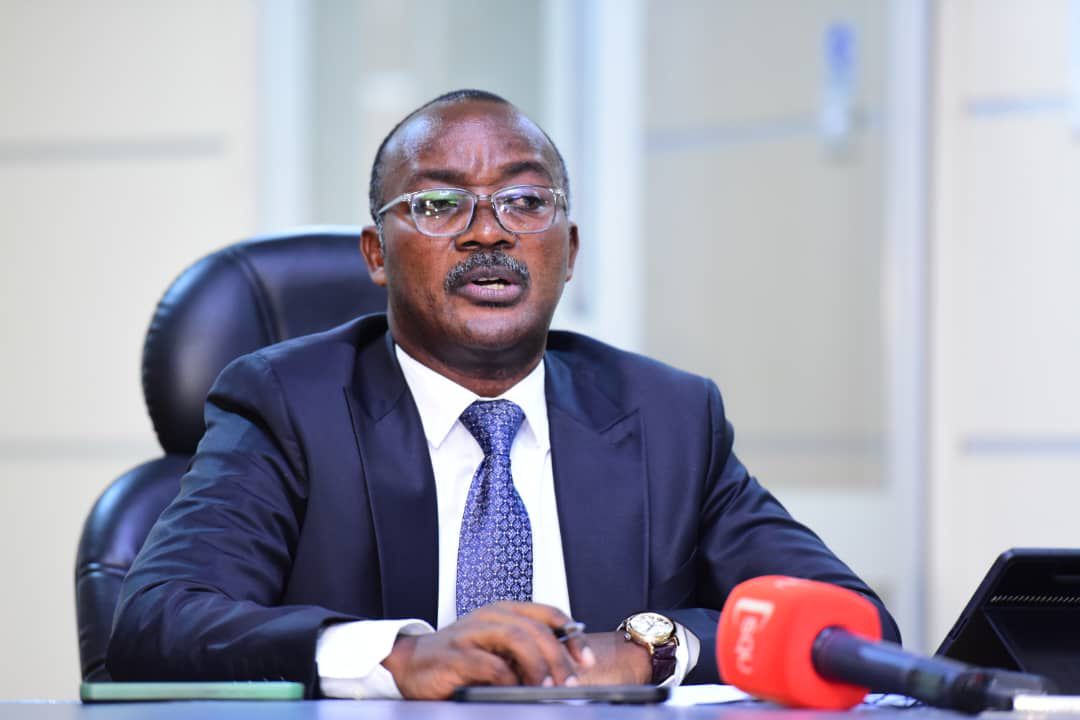
According to the Managing Director of the National Water and Sewerage Corporation, Eng. Dr. Silver Mugisha, the utility has begun constructing new reservoirs and installing larger transmission pipelines to strengthen the network and ensure water reaches high-demand areas more efficiently.
Land has already been secured for a new reservoir in Kanyanya, and residents may have noticed large pipelines being laid as part of an infrastructure upgrade expected to significantly improve water distribution within about two years.
Mugisha also noted that one of the major financial challenges facing the corporation comes from government institutions, where payment delays for water bills can exceed ten months.
However, he said government has recently made efforts to address the issue. In the current budget, about shs81 billion was allocated to reduce these arrears, and discussions with the Ministry of Finance are ongoing to clear the remaining domestic arrears.
Here are excerpts
Paint for us a picture of these 20 million Ugandans National Water says it serves. Where are they located and where are your services concentrated?
National Water currently serves 284 towns across Uganda. From these towns we have about 1 million connections. When I talk about connections, it includes households, institutions, schools, hospitals and businesses. When you estimate the number of people served through those 1 million connections, the figure comes to about 20 million Ugandans. These people are spread across the country. I am happy that National Water is now truly a national institution, unlike before when services were concentrated in a few urban centers.
There has been a lot of focus on areas where oil has been discovered, like Hoima, but some parts of Hoima have gone months without water. Why haven’t you prioritized such areas?
Hoima is one of the towns we serve, but it has perennial water challenges, especially during the dry season. This is mainly because most of the water comes from underground sources. We tried to source water from River Kafu, but the yield was not sufficient. As a result, much of Hoima City relies on underground water systems.
However, the good news is that we have a major expansion project under design to supply water to Hoima City and surrounding areas. We have completed feasibility studies and now know the investment required. We recently held a baraza with stakeholders to explain why water supply reduces during the dry season. Over the next five years, a major regional project will address these shortages.
Another issue concerns the north-eastern part of Kampala. Water from the Katosi Water Treatment Plant exists but some areas still lack supply. What is happening there?
The issue is that the pipes currently installed do not have enough capacity to distribute the water effectively. To solve this, we are constructing new reservoirs and installing larger transmission pipes. For example, we have secured land for a new reservoir in Kanyanya, which will help improve supply. Customers may have already seen large pipelines being installed in the area. We are asking for cooperation from residents so that these projects can progress smoothly.
What is the timeline for these improvements?
The project has already started and is deep into implementation. However, it is complex because laying these large pipes affects communities and infrastructure along the routes. We expect the work to take about two years before the full benefits are realized.
Some communities within Kampala’s informal settlements still complain about poor access to clean water.
The number is actually not very large. In most divisions within the Central Business District, supply is stable. However, areas near reservoirs and booster systems sometimes face pressure issues, especially in high-elevation zones such as Kololo and Muyenga.We have strengthened the networks in many of these areas and the situation is improving.
National Water has experienced financial growth over the past five years, but unpaid bills are reportedly over 350 billion shillings. How do you balance customer defaults while avoiding disconnections for vulnerable communities?
Utilities measure this using a parameter called debt age. For non-government customers, the average debt age is about 2.1 to 2.5 months, which is within acceptable industry limits. In fact, the collection rate is over 95 percent. The main challenge comes from government institutions, where payment delays can exceed ten months.
However, government has recently made efforts. In the current budget, about 81 billion shillings was allocated to reduce these arrears, and discussions with the Ministry of Finance are ongoing to clear the remaining domestic arrears.
Vandalism and illegal connections continue to disrupt water supply. What measures are you putting in place?
Yes, vandalism is a major challenge. Criminals steal water meters, steel pipes and PVC pipes because these materials can be sold on the market. We are working closely with police and other security agencies to address this issue. We are also engaging communities so they understand that this infrastructure belongs to them.
Many Kampala residents complain online about dry taps lasting months, often without immediate feedback from National Water. Are you overwhelmed?
No. Utilities can only be overwhelmed if they lack experience or resources. Our biggest issue is that some infrastructure projects are still under construction. In some areas we are forced to implement water rationing, meaning some zones receive water on certain days while others receive it later. I do not like rationing, but until projects are completed it sometimes becomes necessary.
Aging infrastructure is often blamed for pipe bursts.
It is not mainly aging infrastructure. Most disruptions are caused by human interference with pipelines, construction activities, or pipes becoming exposed due to environmental changes. We now have programs to bury pipes deeper so they are protected from human activity.
You say National Water has national coverage, but sewage services are limited mainly to urban areas. Rural communities rely on other methods.
The ideal situation would be sewer systems everywhere, but resources are limited. In many places we use alternative safe solutions such as septic tanks. Septic systems are safe if properly managed, though poor disposal can cause environmental pollution. We are planning to expand sewer infrastructure in municipalities while also improving mechanized septic management systems.
How does your strategic plan align with the national development plan?
Our strategic plan has already been approved by the board and certified by the National Planning Authority. The plan focuses on sustainable infrastructure development and maintenance, human capital development through staff training, environmental protection, and social sustainability through community engagement. In the next five years, we aim to increase the number of people served from about 20 million to about 26 million. We also plan to increase connections from about 1 million to about 1.2 million and grow our asset base from about 5 trillion shillings to over 6 trillion shillings.
Many customers complain about inconsistent or inflated bills.
Our tariffs are actually very affordable. Low-income users pay around 25 shillings per jerrycan, industries pay around 58 shillings per unit, and standard household consumers pay around 100 shillings per unit. Those without piped water often pay between 500 and 1,000 shillings per jerrycan, which is far more expensive.
If a bill seems high, customers can always request verification. Often the issue is leakage after the meter rather than billing errors.
Have you seen cases where staff intentionally inflate bills?
Our billing system is automated, so inflation is very difficult.In fact, when irregularities occur, they are usually cases where staff under-record usage in collusion with customers, not inflate it.
Are illegal connections increasing or decreasing?
Illegal connections are a major challenge for utilities across Africa. Many people attempt to access water without paying. However, we now work with police and the Water Loss Protection Unit to detect and prosecute offenders.
Your 2025–2030 strategic outlook promises financial viability, yet National Water still depends on grants and government partners. Doesn’t this raise concerns?
It is true. The nature and structure of water services do not allow us to achieve full cost recovery. We cannot pay for all our operating expenses and capital investments using tariffs alone because there is a limit to how much tariffs can be adjusted. In fact, we rarely increase tariffs.
The only adjustments we make are indexing them to reflect changes in the economy. Because of these limitations, government continues to support us, and development partners also play an important role in financing capital investments.
What is within our control is improving efficiency, both in operations and in managing costs. We are focusing very seriously on this. For example, in recent projects we have implemented using our own resources, we have discovered that when we apply cost-effective but high-quality construction methods, we can significantly reduce investment costs.
When we compare projects financed through donor funds with those implemented using our own resources, we find that we can sometimes reduce costs by as much as three times. That is why we are focusing on lowering the cost of investments while maintaining quality.
We are also looking at improving efficiency by reducing non-revenue water. If we reduce water losses by even five percentage points, that will free up a lot of resources and improve our financial sustainability.
Another important area is staff productivity. Leadership at National Water is people-centered, but we must also balance that with performance. Our staff have clear targets, and we invest in training and capacity building so they can perform their roles effectively.
Even with these improvements, we will continue working closely with government. Many of the towns handed over to us still require significant investment before they become financially viable, so continued collaboration with government is essential.
As you work toward the goal of water for all by 2030, what is the single biggest challenge that could prevent you from achieving that vision?
There are two major issues that could affect our ability to reach that vision. The first is government commitment. Our financial flows depend heavily on revenue, and government is one of our key customers. If government does not maintain its current commitment, that could create challenges. However, I am encouraged that this year there has been a significant provision in the budget to address outstanding obligations. The second issue is climate change. If climate change is not effectively managed, it could seriously affect water resources. In our strategic plan, environmental protection and water resource management are key priorities because declining water levels and environmental degradation can directly affect water supply systems.
What about public trust in National Water as a government institution?
Public trust is extremely important to us. Our work depends heavily on customer confidence in our services. That is why we invest a lot in stakeholder engagement. We regularly ask our customers how they feel about our services and how we can improve their experience. We are also using technology to improve customer interactions so that services are faster, more transparent and more responsive.Part of this also involves community empowerment.
National Water has been doing community engagement, but some areas, such as Entebbe, report limited engagement on issues like water quality risks. What explains that gap?
Our institutional policy is continuous customer engagement. Stakeholder engagement is a key part of our operations. However, as with any large organization, there may be areas where activities are not implemented exactly as planned. Some regions are very active in engaging customers, while others may occasionally fall short.
I want to encourage the public to continue raising these concerns whenever they arise. We have made our platforms very open. Customers can reach us through social media, including X and Facebook, as well as other communication channels.
What is your final message to customers who complain about issues such as disorganized service or forceful disconnections? What concrete changes should they expect as you move toward your 2030 vision?
My message to customers is that our vision is water for all. Our goal is to ensure that every Ugandan has access not only to water but to safe and reliable water. We are working hard to expand infrastructure, improve service delivery and strengthen customer engagement.
As we move toward 2030, customers should expect better reliability, improved communication and wider coverage as we continue implementing our expansion projects across the country.
