

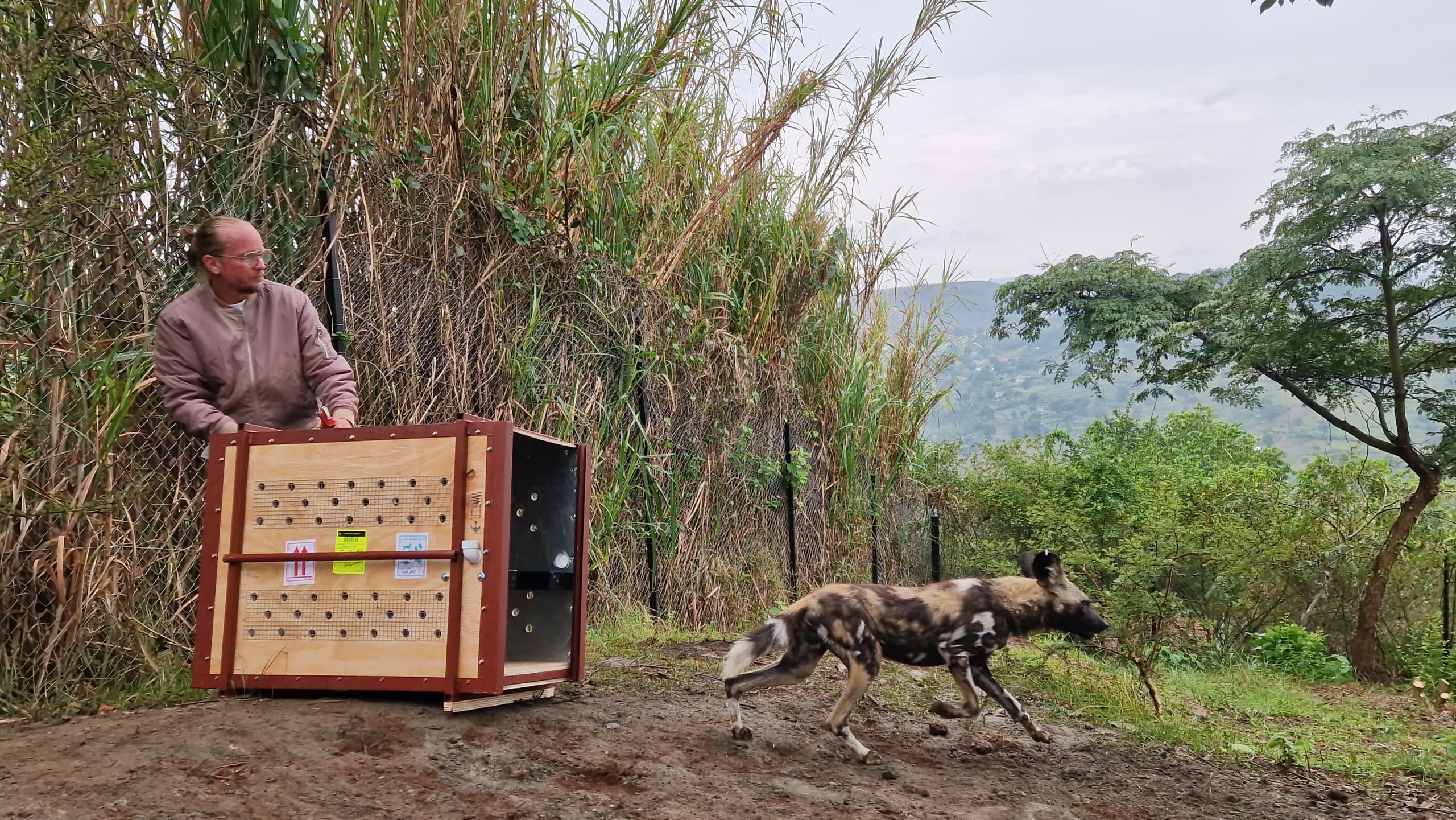
For the first time in over 60 years, African Wild Dogs (Lycaon pictus) are returning to Uganda, thanks to a private conservation initiative by the CTC Conservation Center in Mpigi District.
African Wild Dogs, once native to Uganda, were declared nationally extinct around the 1960s.
Now, under the leadership of Ugandan conservationist Thomas Price, founder of the CTC Conservation Centre, eight of these rare and endangered animals will soon call Uganda home again.
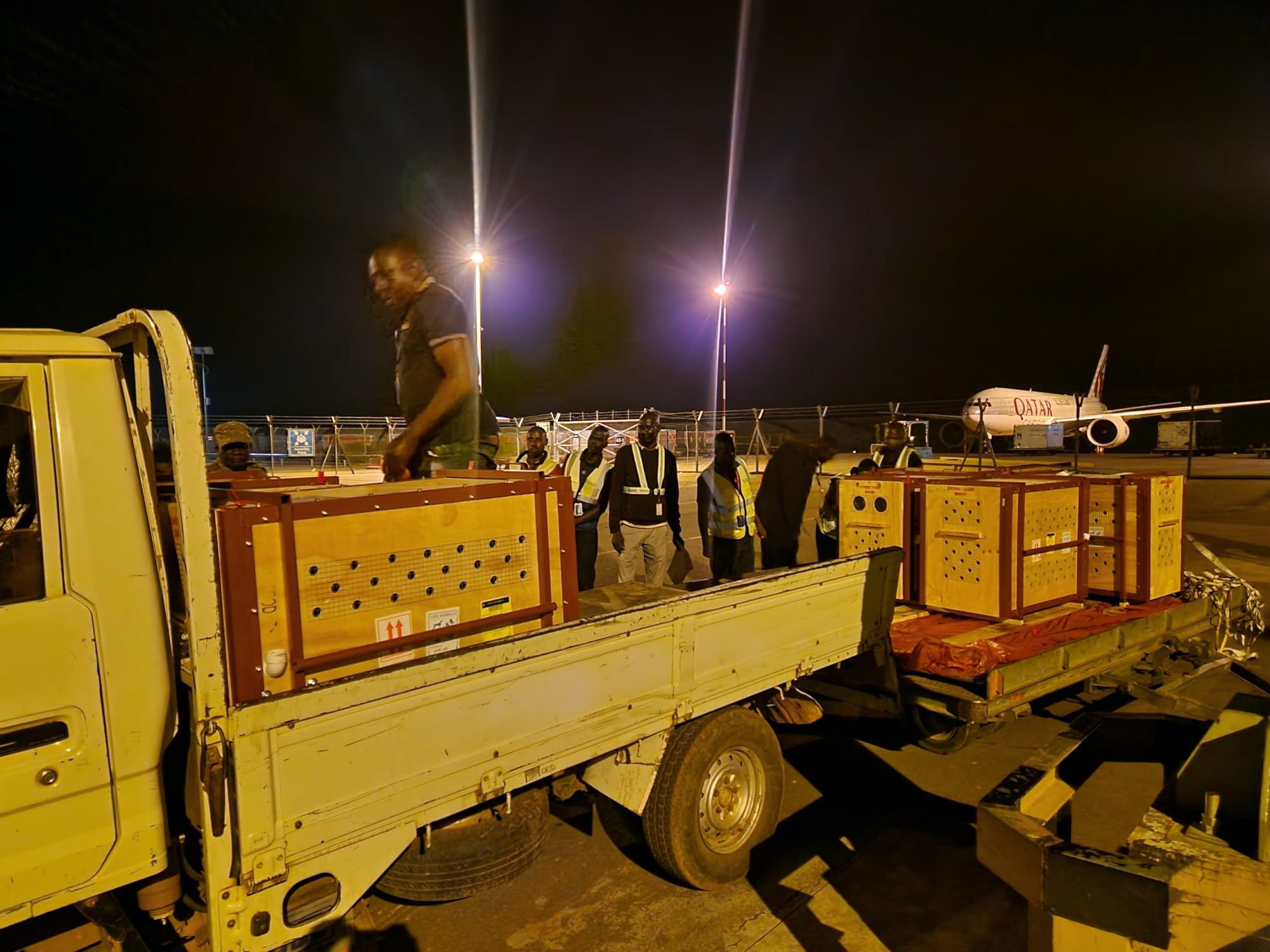
The latest group of six wild dogs arrived on Monday evening, June 23, 2025, at Entebbe International Airport from a conservation facility in South Africa.
They will join two others already being cared for at CTC, bringing the total population to eight.
This is a 100% Ugandan-led initiative aimed at establishing a captive, managed breeding population.
The conservationists say the long-term goal is to support future reintroduction into suitable wild habitats across the country.
“I believe this marks a vital first step in empowering a homegrown Ugandan initiative to address our conservation challenges," says Price.
"It is my sincere hope that with the involvement of additional national stakeholders, this will be just the beginning of a broader movement to restore Uganda’s lost wildlife diversity, for the enduring benefit of our nation and the generations of proud Ugandans yet to come."
Founded in 2015, CTC Conservation Centre is a fully licensed wildlife breeding and education facility, working closely with the Ministry of Tourism, Wildlife and Antiquities (MTWA) and the Uganda Wildlife Authority (UWA).
This conservation breakthrough comes at a time when neighboring Rwanda has been aggressively expanding its wildlife offering to attract eco-tourists.
In 2015, lions were reintroduced to Akagera National Park from South Africa after being wiped out in the 1990s.
That was followed by the reintroduction of 18 eastern black rhinos in 2017 and five more in 2019, sourced from European zoos.
Most notably, in November 2021, Rwanda received 30 southern white rhinos from Phinda Game Reserve in South Africa.
In June 2025, Rwanda received another batch of 70 white rhinos in the largest rhino rewilding effort on the continent, part of African Parks’ long-term plan to move 2,000 rhinos to safe, well-managed landscapes.
These deliberate efforts to restore megafauna have positioned Rwanda’s “Big Six” offering as a powerful draw for tourists seeking rare and iconic wildlife experiences in the region.
And Uganda's conscious effort to boost the game is testament to the immense.potnetial of tourism, regularly among the top three highest forex exchange earners in the country.
Wild dogs, one of Africa’s most endangered and charismatic carnivores, still exist in scattered populations across about a dozen African nations.
These include South Africa, Botswana, Namibia, Zimbabwe, Zambia, Tanzania, Kenya, Mozambique, Malawi, and Ethiopia, with a fragile West African subpopulation hanging on in Senegal’s Niokolo-Koba National Park.
With fewer than 6,600 mature individuals remaining in the wild, mostly in fragmented subpopulations, their presence offers high-value appeal for wildlife tourism.
Unlike other large predators, wild dogs are diurnal, social, and known for their coordinated hunting—traits that create captivating viewing experiences for tourists.
Conservation areas that feature wild dogs have seen extended visitor stays, increased tourist satisfaction, and higher returns in conservation funding, highlighting their potential to diversify Uganda’s safari offering beyond the traditional Big Five.
As such, their reintroduction not only restores a missing link in Uganda’s ecological heritage but also opens new possibilities for conservation-driven economic growth.
Uganda lost its population of African wild dogs around the 1960s or early 1970s due to a combination of habitat loss, human-wildlife conflict, disease transmission from domestic dogs, and extermination campaigns that labeled the species as vermin.
By the late 20th century, wild dogs were considered locally extinct, with no confirmed sightings for decades.
In recent years, there have been occasional unverified reports from border areas like Kidepo Valley National Park, which connects to ecosystems in South Sudan and Kenya, but no stable or breeding populations have been confirmed.
While natural recolonization remains a possibility, the species is still officially considered extinct in Uganda.