
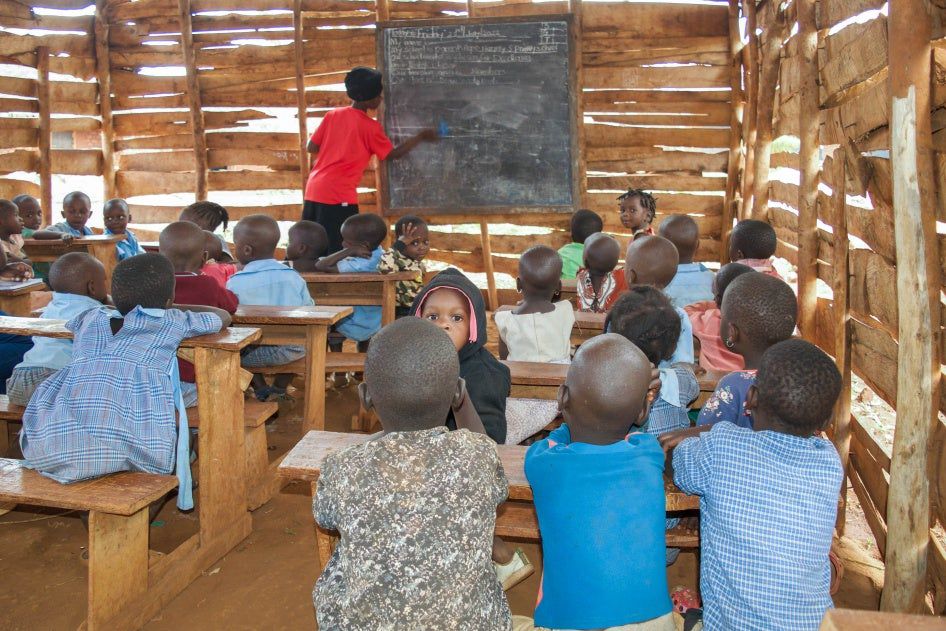
At least 3 million Ugandan children of primary school age are not attending school despite government investments in education, the Anti-Corruption Coalition Uganda (ACCU) has warned.
Christine Byiringiro, Program Manager at ACCU, said the 2024 national census recorded 8 million children aged 6–12 years, but only 5 million are enrolled in primary schools.
“This means 3 million children who should be in P1 to P7 are not in school. Where are they? Government must plan better and deliberately respond to their plight,” Byiringiro said.
She acknowledged progress in reducing infant mortality and expanding vaccine coverage, but noted that corruption and debt repayment continue to drain resources that should fund child-focused services.
“Uganda loses over Shs 10 trillion annually to corruption. If these resources were responsibly used, we would see real improvements in education, health and social protection for children, who make up the largest demographic of the country,” she said.
Byiringiro also questioned Uganda’s ambitious economic growth targets, warning that the country risks failure without heavy investment in human capital.
“The UNDP Human Capital Index puts Uganda at 39 percent. This means a child born today will only reach 39 percent of their potential productivity. Without prioritizing education, health, and water and sanitation, growth projections will remain a dream,” she warned.
She cited Karamoja as a stark example, where 74 percent of school-going children aged 6–12 are out of school. The lack of sanitary facilities has also forced many girls to miss school during menstruation.
“Out of 200 schools visited in the Auditor General’s report, 64 percent of girls could not attend school while on their periods due to lack of water, poor facilities, and lack of support from teachers,” she said.
Byiringiro urged government to increase the capitation grant per child from the current Shs 20,000 to at least Shs 63,000, as recommended by the National Planning Authority, and to fast-track health insurance coverage.
“No country has developed without investing in its human capital. Uganda must prioritize children if we are to realize sustainable growth,” she said.
