

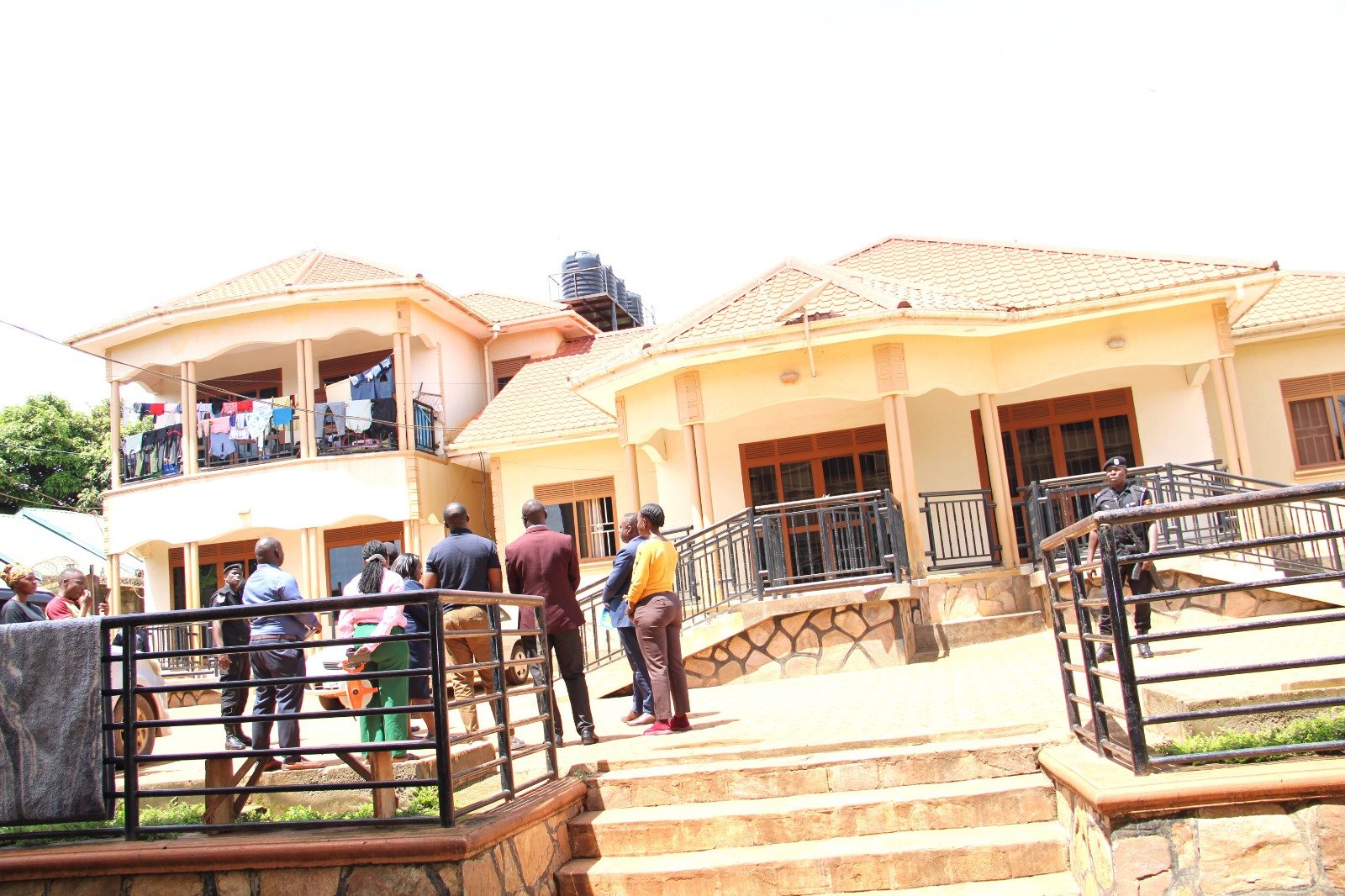
Wednesday morning was wild in a mild manner. The Inspector General of Government (IGG), Lady Justice Aisha Naluzze Batala, visited one of 17 properties forfeited to the state by corrupt public officials, signaling yet another step in her office’s high-profile asset recovery campaign.
The property, a Kitende-based apartment complex previously owned by a former Uganda National Roads Authority (UNRA) staff, had been surrendered after investigations revealed he had underdeclared his assets by Shs1.6 billion.
The building, comprising ten apartments, currently earns a monthly rent of Shs7 million, all of which is remitted directly to the IG Asset Recovery Account at the Bank of Uganda.
Justice Naluzze commended IGG investigators for their diligence, describing the initiative as a demonstration of the institution’s “strong commitment to elimination of corruption through asset tracing and financial profiling.”
She affirmed that the office will continue identifying illicitly acquired properties with the ultimate goal of returning public funds to the treasury.
Indeed, under her leadership, five of the 17 recovered properties are already generating rental income, while the remaining 12 await development.
On paper, these actions signal an IGG office fully operational and fearless. After all, Justice Naluzze, who pledged during her parliamentary vetting in October 2025 that “it’s not going to be the same business as usual,” has presented herself as a reformer determined to disrupt the entrenched culture of impunity.
“I commit to bring change in my office and all public servants should brace themselves because I have a lot in stock to do with prosecution,” she declared, referencing her intent to pursue high-profile cases and strengthen institutional accountability.
Yet, as encouraging as these recoveries appear, skeptics are quick to question the depth of the IGG’s bite. The truth is that many of the officials surrendering property today are arguably the “small fish” in Uganda’s deep-seated culture of corruption.
While the recovery of the Kitende apartments and others like them offers visible proof of action, they represent a fraction of the nearly Shs9.9 trillion reportedly lost annually to embezzlement and misuse of public funds, according to the 2024 IGG report.
Furthermore, recent developments suggest a dissonance between rhetoric and enforcement. In the last few months, the IGG dropped corruption charges against certain officials, including Members of Parliament, raising questions about selective prosecution.
How does the public reconcile the seizure of a few properties with the apparent leniency shown to higher-profile figures? For many observers, this creates the perception that the IGG’s visible successes are merely a cosmetic gloss over the broader, more systemic corruption that remains largely untouched.
Justice Naluzze’s own words during her site visit today seem to reinforce her commitment: “We will continue tracing more properties to recover stolen public funds.”
Yet, words must be measured against actions. Will her office go beyond recovering abandoned or voluntarily surrendered assets and take on the politically connected or entrenched elites whose misconduct costs the state billions annually? Or will the IGG remain confined to cases where prosecutions are safe, and outcomes guaranteed?
The challenge is clear. True impact requires targeting the faceless yet powerful actors who dominate Uganda’s political and economic corridors, those whose corrupt activities ripple across the system.
Without pursuing these figures, high-profile property recoveries risk being dismissed as symbolic victories rather than transformative reforms.
Still, the institutional groundwork cannot be ignored. Under Justice Naluzze, the IGG has operationalized an asset tracing and financial profiling strategy that, if consistently applied, could fundamentally reshape the anti-corruption landscape.
Managed properties now generate revenue, processes are formalized, and the office appears willing to publicly showcase its achievements, sending a signal to both offenders and the public that corruption will be met with accountability—at least for some.
The question now is whether Lady Justice Naluzze will extend this momentum to cases involving entrenched and politically connected elites, or whether the IGG will remain at the level of recovering surrendered or easily identifiable assets.
Public trust hinges not on the occasional headline, but on the willingness to confront systemic corruption, no matter how high up it reaches. As she herself noted after her vetting, “It won’t be business as usual.”
The nation will now watch closely to see if that is more than just rhetoric.