

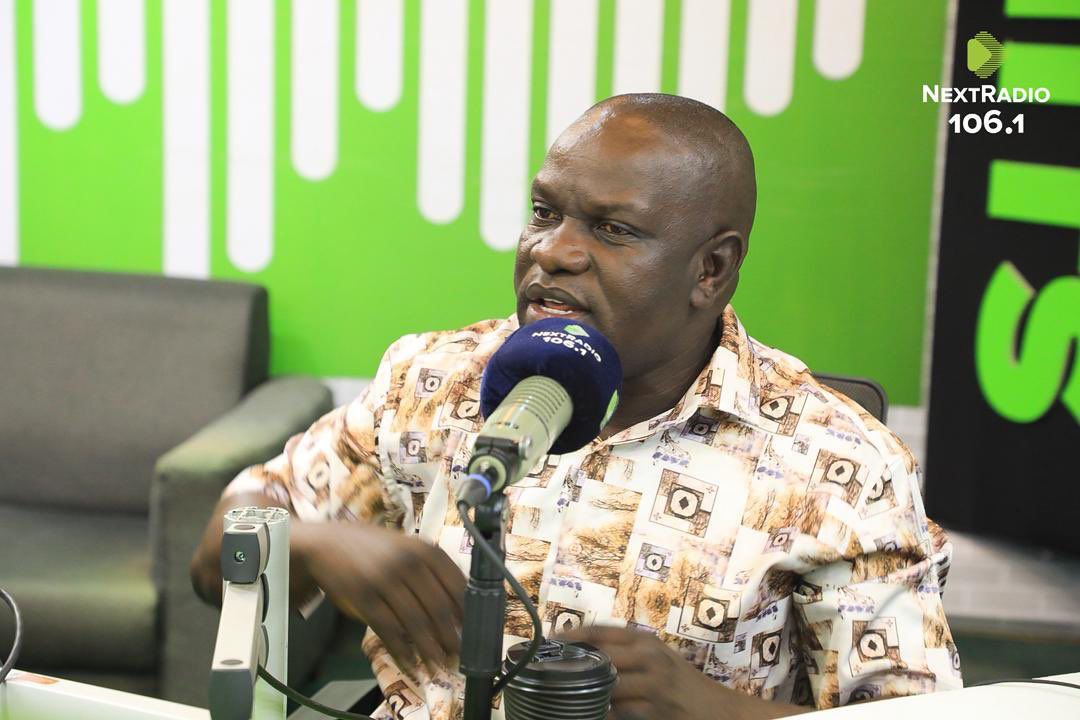
Former Member of Parliament for Jinja Municipality East and Jinja South East Member of Parliament–elect, Paul Mwiru, has warned that the controversial Administration of Parliament (Amendment) Bill, 2024 introduced by Richard Lumu is aimed at weakening the political influence of the National Unity Platform (NUP) in Parliament.
Speaking to Canary Mugume during Next Big Talk hosted by Next Radio on Wednesday, Mwiru criticised the proposed amendments, arguing that they are driven by political motivations rather than the need for institutional reform.
According to Mwiru, the proposed legislation is not intended to address any genuine gaps in parliamentary administration but instead seeks to undermine the opposition’s independence.
“What Hon. Richard Lumu is trying to do with the Bill, to me, is not informed by any mischief he is trying to correct. It is driven by ego and some anger,” he said.
Mwiru warned that if the bill is passed in its current form, it could give the ruling National Resistance Movement (NRM) indirect influence over the leadership of the opposition in Parliament.
“The Administration of Parliament (Amendment) Bill is intended to control the Leader of Opposition by the ruling party in Parliament,” he said.
Mwiru further argued that many opposition parties already face varying levels of political pressure or cooperation arrangements with the ruling party, which could affect the independence of opposition decision-making.
“As you have seen in the body politic, most of our opposition political parties, the NRM party has some control, and others are even engaging through MOUs,” he said.
Mwiru cautioned that the bill could ultimately allow the ruling party to determine who becomes the Leader of the Opposition (LoP).
“If the Richard Lumu Bill passes, I see the NRM determining who becomes the Leader of Opposition in Parliament,” he said.
Mwiru’s remarks come as Parliament prepares for a high-stakes debate today, Thursday, March 12, when the Administration of Parliament (Amendment) Bill, 2024 is scheduled for its third and final reading.
The private member’s bill, tabled by Mityana County South MP Richard Lumu, has triggered intense debate across the political divide, drawing criticism particularly from opposition parties that say the reforms could weaken their parliamentary coordination.
At the centre of the proposed reforms is a significant change in how opposition leadership is selected. Currently, the largest opposition party in Parliament appoints the Leader of the Opposition.
However, the bill proposes replacing this system with an electoral model in which all opposition Members of Parliament vote to choose the LoP.
Supporters argue that the change would democratise opposition leadership by allowing smaller parties and independent MPs to participate in the selection process.
The proposal has gained support from members of the ruling National Resistance Movement (NRM) caucus, a development that has intensified suspicion among opposition leaders.
NRM Caucus Spokesperson Brandon Kintu defended the proposed amendments, saying they are intended to strengthen cohesion within the opposition rather than weaken it.
According to Kintu, Lumu’s initiative seeks to “strengthen and build harmony within the opposition in Parliament.”
He also argued that the reforms could simplify the responsibilities of the Leader of the Opposition, noting that the office currently carries extensive duties.
Kintu further maintained that the changes could promote fairness in the allocation of parliamentary resources by ensuring smaller political parties and independent legislators are not sidelined.
Despite these assurances, leaders from the National Unity Platform, Forum for Democratic Change (FDC), and Alliance for National Transformation (ANT) have strongly rejected the proposal.
Several opposition legislators have described the bill as being drafted in bad faith and warned that it could fracture opposition unity and weaken its ability to hold the government accountable.
Concerns have also been raised about the speed at which the bill is moving through Parliament. Alion Yorke Odria, the MP for Aringa North, questioned why Lumu’s proposal appears to be progressing faster than other similar legislative proposals that were submitted earlier but have stalled.
Responding to the criticism, Brandon Kintu urged stakeholders to study the contents of the bill carefully rather than speculate about its intentions.
He acknowledged that if lawmakers determine the process is being rushed or that the bill could lead to unintended consequences, more time may be needed for consultation and benchmarking with other parliamentary systems.
As Parliament prepares to vote, the debate surrounding the Administration of Parliament (Amendment) Bill, 2024 has evolved into a broader political contest over the balance of power within Uganda’s opposition ranks and the future structure of parliamentary leadership.