

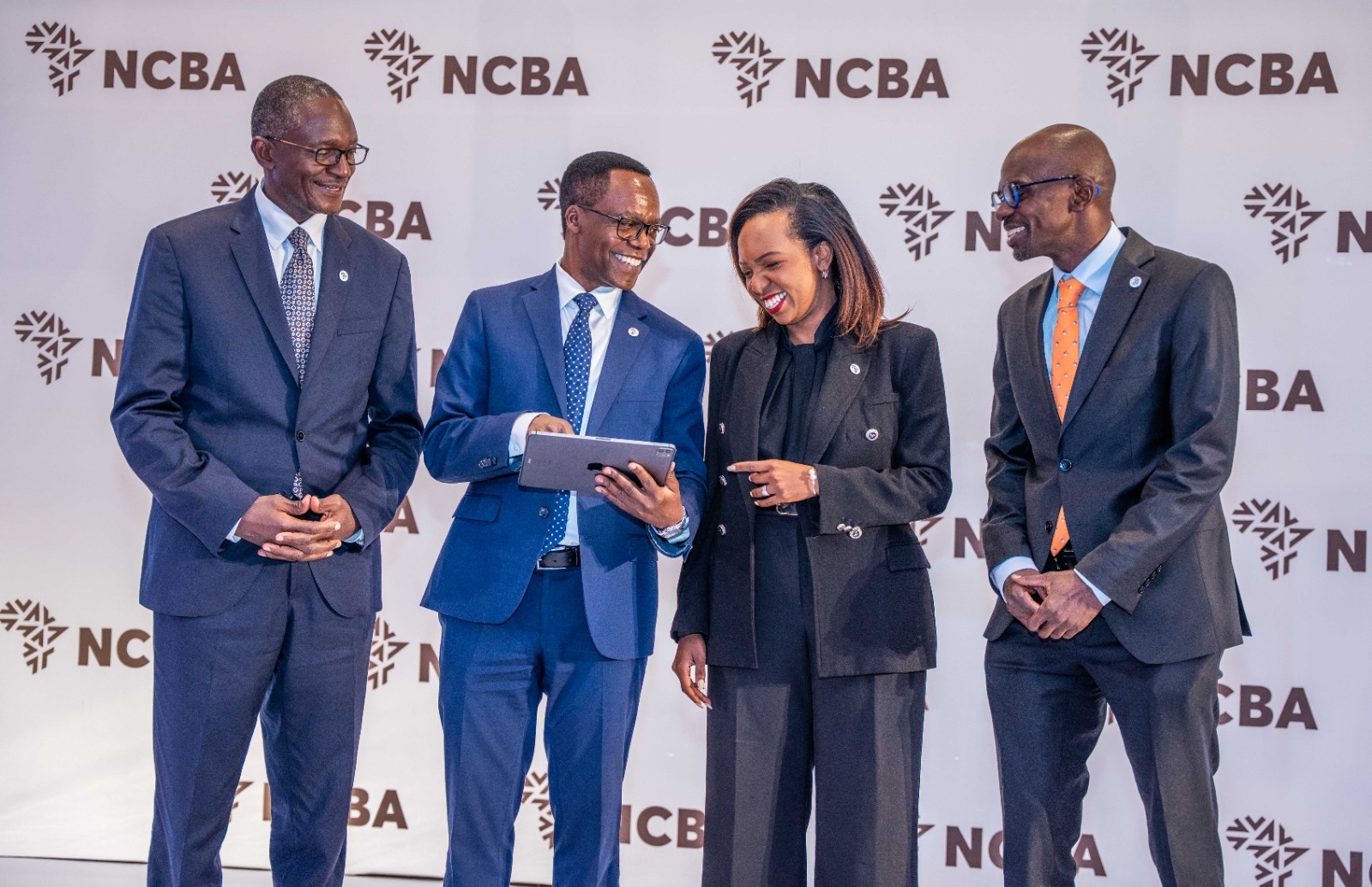
NCBA Group PLC has posted a 7 percent increase in net profit to KES 23.4 billion (Shs 660 billion) for the year ended 2025, fueled by strong asset growth, improved margins, and accelerated expansion in digital lending.
The Group’s results show profit before tax rose 10.9 percent to KES 27.9 billion (Shs 786 billion), while operating income grew 17 percent to KES 73.3 billion (Shs 2.06 trillion). Management credited the performance to a diversified business model delivering value across banking and non-banking segments.
The lender announced an enhanced dividend payout of KES 11.7 billion (Shs 330 billion), up from KES 9.1 billion (Shs 257 billion) in 2024, reflecting stronger shareholder returns and robust capital generation.
Group Managing Director John Gachora said the results mark a strong conclusion to the Group’s 2020–2025 strategic cycle.
“Disciplined execution and enhanced diversification over the last five years have delivered a more resilient institution with strong momentum going forward,” Gachora said.
Regional Performance and Digital Growth
NCBA’s regional operations, including Uganda, contributed KES 3.6 billion (Shs 101 billion) in profit before tax, accounting for 13 percent of total Group earnings. Across regional markets, lending and customer deposits grew by approximately 14 percent year-on-year, driven by improving economic activity and credit demand in Uganda, Tanzania, and Rwanda.
Uganda remains a key growth market for NCBA, with expanding opportunities in retail banking, SME financing, property lending, and digital financial services. Rising urbanisation, greater financial inclusion, and increased credit demand were highlighted as growth drivers.
Digital lending emerged as a major growth engine, with total disbursements rising 33 percent to KES 1.4 trillion (Shs 39.4 trillion). Investments in artificial intelligence, machine learning, and data analytics enhanced credit scoring, enabling scalable lending while maintaining prudent risk management. Digital financial services now contribute 32 percent of total Group profitability.
Assets, Deposits, and Branch Strategy
Total assets increased 8 percent to KES 716 billion (Shs 20.2 trillion), while customer deposits rose 6 percent to KES 532 billion (Shs 15.0 trillion). The loan book also recorded renewed growth, reflecting strong credit uptake.
Despite rapid digitalisation, NCBA maintains that its physical footprint remains strategically important, operating 123 branches across five markets, most of which are profitable. Gachora emphasized that customer insights continue to show demand for physical engagement, particularly for relationship management and advisory services.
Non-Banking Growth and Wealth Management
NCBA’s non-banking businesses, including investment banking, leasing, and insurance, delivered strong performance, reinforcing income diversification. Wealth management assets under management grew from KES 25 billion (Shs 705 billion) at the time of the merger to over KES 100 billion (Shs 2.82 trillion), supported by synergies between commercial and investment banking operations.
Looking Ahead: Ubuntu Strategy 2026–2030
NCBA unveiled its new five-year strategic plan, Ubuntu (2026–2030), themed “Banking on Belief – Empowering Ambitions.” The strategy aims to strengthen core banking operations, scale high-growth segments, unlock new opportunities, and build a future-ready operating model.
The Group will focus on deepening competitiveness and accelerating regional expansion, particularly in Uganda and East Africa, while exploring opportunities arising from a proposed Nedbank acquisition to enhance capital strength and support growth.
“We are proud of the progress we have made and excited about the future. We remain committed to delivering long-term value for our customers, shareholders, and communities,” Gachora said.