

Uganda’s mining sector is facing growing scrutiny as policymakers, industry leaders and civil society actors raise concerns over licensing delays, weak revenue tracking and limited transparency in the sharing of mineral royalties.
The concerns dominated discussions at the Annual Tax Dialogue, where stakeholders warned that bureaucratic inefficiencies in the mining licensing process are undermining formal investment while fueling widespread illegal mining activities that deprive the country of significant revenue.
The debate comes at a time when Uganda’s mineral sector is increasingly viewed as a key driver of economic transformation.
The sector is a strategic pillar under the Ten-Fold Growth Strategy championed by President Museveni, which aims to expand the country’s economy to about USD 500 billion by 2040.
Despite this ambition, mining currently contributes only about 1.9% to Uganda’s Gross Domestic Product, a sharp decline from its historical contribution of over 7%, highlighting a significant gap between the country’s mineral potential and its current performance.
Uganda’s mineral wealth has also attracted international attention in recent years, particularly due to booming gold exports.
Official figures indicate that the country exports gold valued at more than $5 billion annually, equivalent to roughly Shs19 trillion, making it one of the country’s largest export earners.
However, experts argue that the lack of licensed mining operations raises serious questions about the traceability and accountability of much of the gold exported from the country.
Tony Olanya, a natural resources consultant, said bureaucratic barriers in the licensing process are discouraging formal mining operations and pushing many miners into the informal sector.
“The documentation is cumbersome and involves a lot of unnecessary bureaucracy,” Olanya said during the dialogue. “When we meet with government, it should not be about public relations but about the reality on the ground.”
According to Olanya, the majority of mining activities in Uganda are currently conducted by unlicensed operators.
“If you look at the number of people illegally mining, they are more than those who are licensed. What does that tell you? It means we are losing significant financial value as a country,” he said.
He added that the mismatch between the country’s large gold exports and the limited number of licensed mines raises concerns within global financial systems.
“The world sees Uganda exporting about USD 5 billion worth of gold every year, yet we cannot fully account for it because we have very few licensed mines,” Olanya said.
Government officials at the dialogue acknowledged the concerns but emphasized that mechanisms for mineral royalty collection already exist.
David Sebagala, a Senior Inspector of Mines at the Ministry of Energy and Mineral Development, explained that mineral royalties collected from mining companies are remitted to the Uganda Revenue Authority for management.
He noted that under the current framework, 15% of the mineral royalties collected are allocated to local governments in mining areas, while the rest goes to the central government and other beneficiaries in accordance with the law.
Stakeholders, however, argued that Uganda still lacks a strong framework for managing and investing revenues generated from the mining sector.
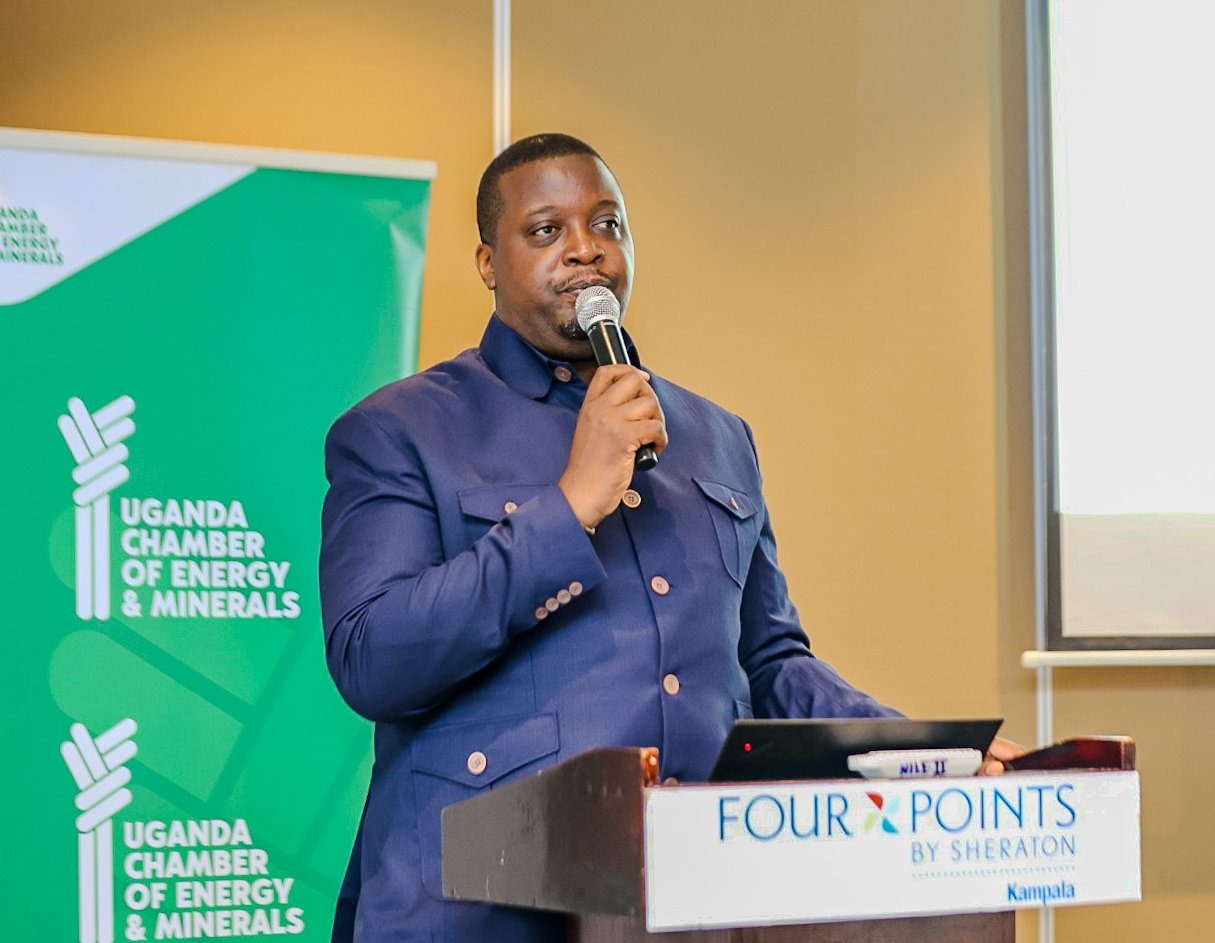
Humphrey Asiimwe, chief cxecutive of the Uganda Chamber of Energy and Minerals, said the country must establish a more transparent and sustainable system for managing mining revenues.
“As a country we need to ask key questions about royalties — who collects them, how they are collected, and what they are used for,” Asiimwe said.
He proposed the creation of a mining revenue investment mechanism, similar to the Uganda Petroleum Fund, to ensure that revenues generated from the sector are strategically invested for long-term national development.
“We need to collect, track and invest revenues coming from mining in a deliberate way so that the country can see tangible development from its mineral resources,” he said.
Asiimwe pointed to countries such as Sweden and Australia, which successfully used mining revenues to transform their economies through structured revenue management systems.
Another major issue raised during the dialogue was the need to accelerate the formalization of Uganda’s artisanal and small-scale mining sector.
Lynn Gitu, a representative from the Natural Resource Governance Institute, emphasized that Uganda’s mining fiscal regime, including taxation, royalties and licensing frameworks, plays a critical role in determining investment attractiveness and government revenue collection.
She highlighted the importance of strengthening the country’s Mining Cadastre system, which manages the allocation and monitoring of mineral rights.
“A transparent and well-managed cadastre system is essential to ensure proper allocation of mineral rights and effective oversight of the sector,” Gitu said.
“Formalization can strengthen governance, promote responsible mining practices and significantly increase revenue collection for national development,” she added.