

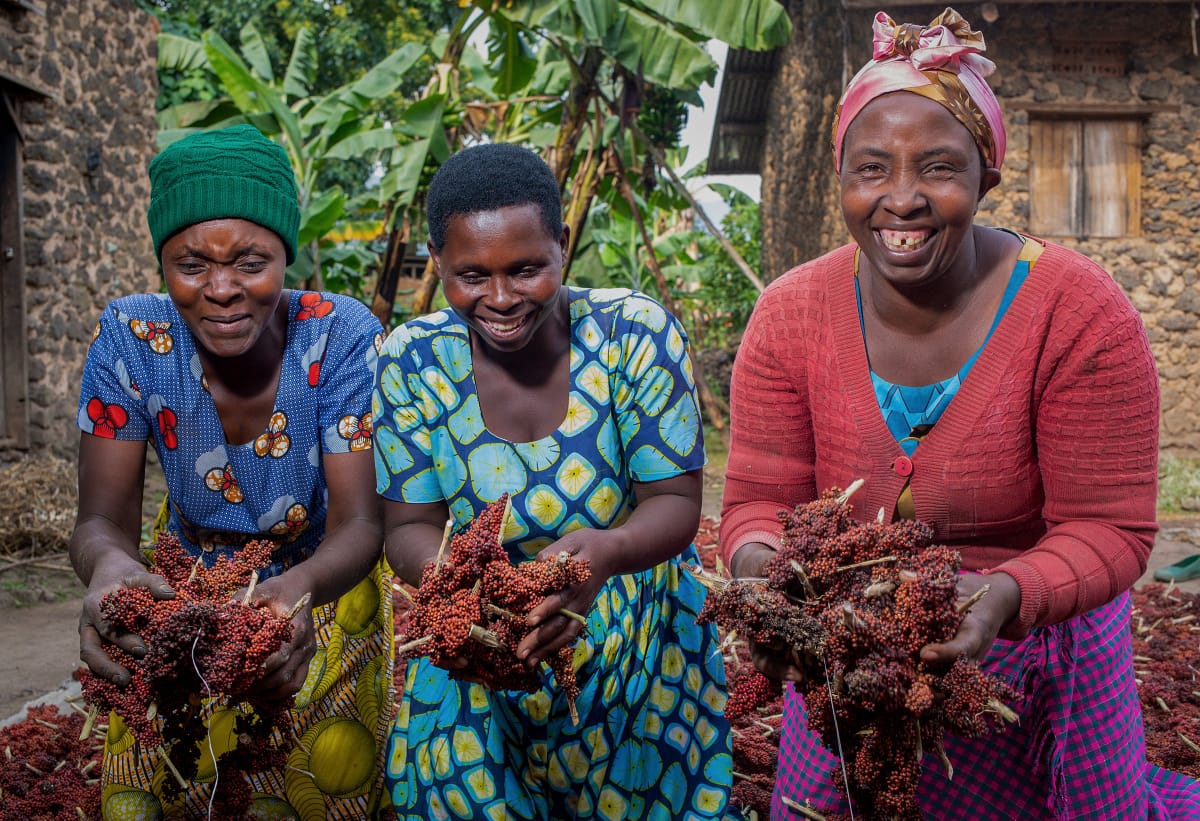
Women from marginalized communities, including the Batwa and smallholder farming households, are increasingly taking a more active role in household decision-making and pursuing land ownership through the Gender Action Learning System (GALS), a methodology designed to promote gender equality and economic empowerment.
The approach is helping women identify barriers that limit their access to productive resources while equipping them with practical tools to plan for their future and advocate for their rights.
Through exercises such as the Vision Road Journey and the Gender Balance Tree, participants are encouraged to map out personal and family goals, examine gender inequalities within their households and communities, and develop strategies to overcome them.
_______________________________________
Context
Women in Uganda continue to face significant challenges in accessing and controlling land despite their major contribution to agricultural production. Development organisations have increasingly promoted approaches such as GALS to address gender inequalities at household and community levels while improving economic outcomes.
_________________________________________
The training also promotes joint land ownership and equitable access to resources, particularly land, which remains one of the most contested assets in many rural communities.
For many participants, the programme has changed how they view their role in shaping their families' future.
"I am grateful for this training because it opened my eyes to the importance of planning for the future," said Byekusungu Marion.
"Before, I had never thought about developing a long-term vision as a woman. Through the Vision Road Journey, I now have a clear plan to acquire more land for my children and improve our family's future."
Development practitioners say unequal power relations continue to limit women's ability to own, control and benefit from land despite its central role in rural livelihoods.
They argue that empowering women to participate confidently in discussions about land ownership, inheritance and resource allocation can improve household welfare, reduce conflict and strengthen community development.
Stakeholders are now calling for closer collaboration between the Ministry of Gender, Labour and Social Development and the Ministry of Lands, Housing and Urban Development to make land registration and documentation processes more accessible to women at the grassroots level.
"There is a need for deliberate efforts to ensure that women-friendly land registration and documentation systems are available in local communities," one development practitioner said.
"Many women still face challenges accessing land rights due to limited information and complex procedures."
Advocates have also urged the Ministry of Lands to work with civil society organisations such as ESAFF Uganda to incorporate the GALS methodology into existing community land governance structures, including Area Land Committees.
They believe this would strengthen local mechanisms for resolving land disputes while promoting gender-sensitive approaches to land management.
Stakeholders are further calling for intensified community awareness campaigns to address knowledge gaps that continue to prevent many rural women from fully benefiting from land ownership and utilization.
Experts say the methodology is most effective when combined with legal support, community advocacy and policy reforms aimed at addressing systemic barriers to women's land rights.
"Secure land rights have the potential to improve household incomes, reduce conflicts and create more stable communities," advocates noted.
"The GALS approach helps women move beyond aspirations and take concrete steps toward achieving meaningful social and economic empowerment."
As more communities adopt the methodology, development actors believe it could play a significant role in advancing gender equality, strengthening rural livelihoods and ensuring women have a greater say in decisions affecting their families and communities.