

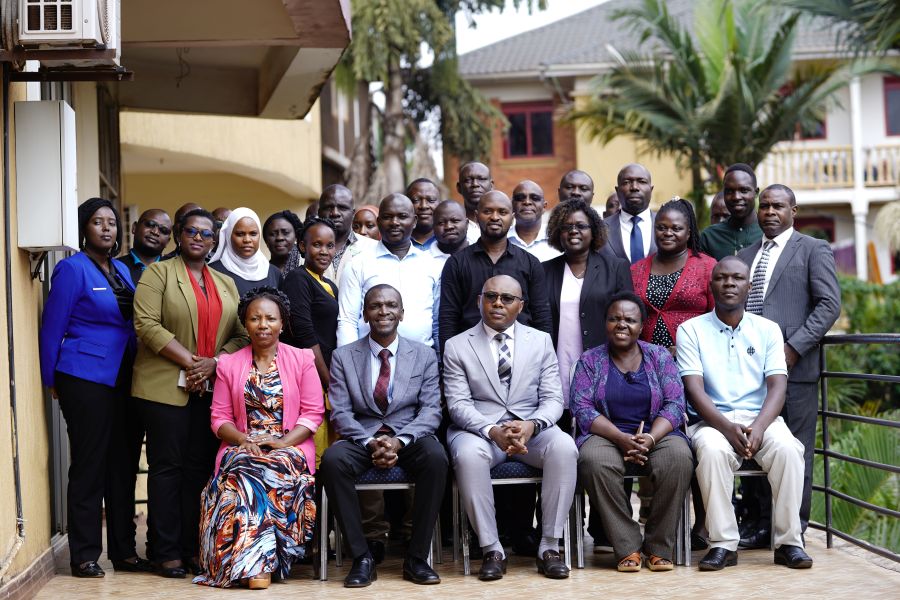
The Uganda Forum for Agricultural Advisory Services (UFAAS) has launched a two-day training workshop aimed at equipping private sector agricultural extension workers and youth-led agribusinesses with skills in holistic agricultural risk management (HARM).
The workshop, held at Grand Global Hotel in Kampala, seeks to empower participants to help farmers proactively assess and manage risks across the agricultural value chain.
“Many farmers face challenges ranging from climate-related risks such as droughts and landslides to pests, diseases, and market uncertainties,” said Dr Richard Miiro, Chairperson of UFAAS and senior lecturer at Makerere University.
“Through this training, we want to move beyond reacting to problems after they occur. Early planning and integrated solutions are essential for sustainable farming.”
He said the two-day initiative builds on training previously conducted for 293 government agricultural extension officers but marks the first time such an opportunity is offered to private sector actors, particularly youth-led agribusinesses.
Dr.Miiro said by expanding access, UAFAS aims to strengthen the capacity of thousands of farmers indirectly through their service providers.
Strategic Partnerships and Responsive Solutions
Dr Evans Nakhokho, General Manager for Agriculture, Microfinance, and SME at Centenary Bank, emphasised the role of partnerships in supporting farmers.
“Collaboration allows us to understand the needs of our customers and partners. Through financial literacy, access to credit, insurance, and integrated value chain solutions, we can help farmers manage risks effectively while ensuring financial services remain sustainable,” he said.
Nakhokho noted that insurance products, when designed correctly, benefit multiple stakeholders.
“Insurance should protect both the farmer, who has invested in production, and the financial institution, which has provided financing. When insurance responds to the needs of all actors in the value chain, everyone benefits,” he said.
UFAAS Chief Executive Beatrice Luzobe described the forum as a national platform that brings together actors from public and non-public sectors, including civil society, farmer organisations, research institutions, and private companies.
“Our members come from all fields of agriculture, from crops and livestock to nutrition and environment, and range from certificate holders to PhD graduates,” she said.
“This workshop is a milestone. It’s just the beginning of a process to strengthen agricultural risk management across Uganda. By training private sector extension workers, we equip them to guide farmers, improve productivity, and reduce losses caused by unforeseen risks.”
According to Dr Miiro, farmers face multiple obstacles, including unpredictable weather, limited access to markets, and insufficient knowledge of value chains.
“When risks are addressed in isolation, farmers often encounter unexpected challenges, leading to losses, loan defaults, or even abandoning viable enterprises. This training equips those supporting farmers to think ahead and plan for risks before they occur.”
Officials said participants will learn strategies including selecting high-quality seeds and livestock, adopting proper management practices, complying with regulatory requirements, and safeguarding assets against theft.
By integrating risk management into daily operations, the workshop aims to improve decision-making and long-term sustainability.
The two-day training, supported under the Platform for Holistic Agricultural Risk Management (PARM), is expected to create ripple effects across Uganda’s agricultural sector.
By strengthening the capacity of extension workers and youth-led agribusinesses, UFAS hopes to improve agricultural resilience, promote agro-industrialisation, and enhance market linkages for farmers.
“This is not just training; it’s a culture shift. We are building a proactive mindset in the sector, so that both farmers and those who support them can plan effectively and respond to challenges before they become crises," said UFAAS Chief Executive Officer Beatrice Luzobe.