

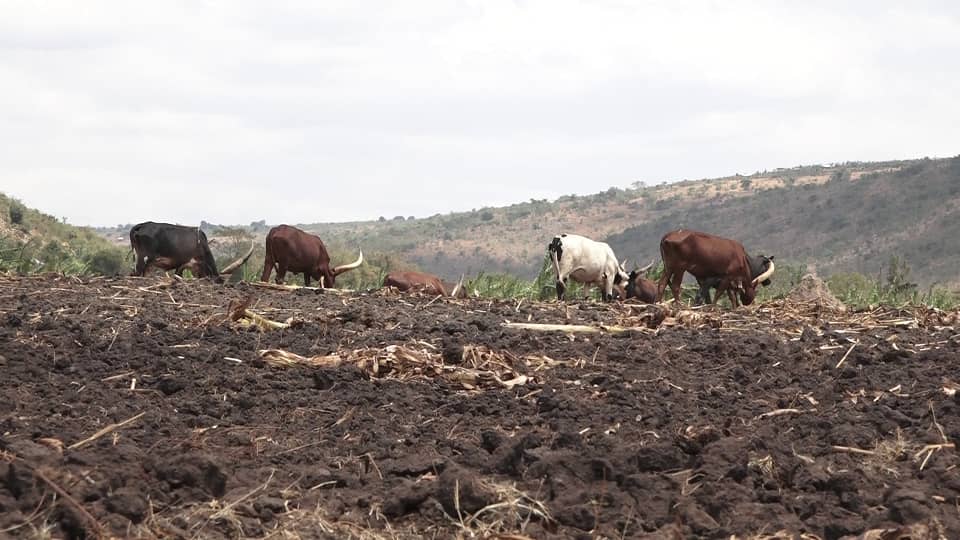
The government has introduced a new cost-sharing policy requiring farmers to contribute financially to the vaccination of livestock against Foot-and-Mouth Disease (FMD), in a move aimed at strengthening long-term disease control efforts.
Under the new approach, the Ministry of Agriculture, Animal Industry and Fisheries will lead the national vaccination programme while farmers contribute part of the cost of vaccines for their animals.
Previously, the government funded the entire vaccination exercise. However, officials say the arrangement proved financially unsustainable and failed to eliminate the disease, which has continued to affect livestock production in several parts of the country.
Dr Ben Ssenkera, the national coordinator of the Foot-and-Mouth Disease Control Programme, said the new policy marks a major shift in Uganda’s strategy to combat the disease.
“This is a new shift in the control and prevention of foot-and-mouth disease. Before, we would vaccinate livestock but still the disease would not be eradicated. But with this new approach, we are very much sure we will come out on top of this disease,” he said.
Under the policy, farmers will be required to contribute an annual fee of Shs16,000 for each cow and pig, and Shs8,000 for each goat or sheep. The money will be remitted through designated banks and used to help government procure and stock vaccines and other veterinary drugs.
Dr Bruhan Kasozi, the District Veterinary Officer for Isingiro District, said the farmer contributions will ensure consistent availability of vaccines.
“In this new policy, farmers will be mandated to pay an annual Shs16,000 for each cow and pig and Shs8,000 for each goat and sheep. This money will help government procure and stock drugs so we won’t lack them anymore,” he explained.
The ministry has already launched a nationwide sensitisation and training campaign to ensure farmers understand the new programme and enrol their livestock.
As part of the requirements, farmers will be expected to vaccinate all their animals twice every year.
Authorities have warned that farmers who fail to comply with the policy risk losing access to livestock markets and dairy supply chains.
Mr Erickson Nabimanya, chairperson of Nyamisindo Dairy Farmers Cooperative Society, said dairy cooperatives would enforce the new regulations to ensure compliance among members.
“This is a policy by government and we are going to be strict on it. As Nyamisindo Cooperative we will start giving our farmers advances so that they can pay this money, and failure to vaccinate their cows will mean we cannot accept their milk,” he said.
The programme will initially focus heavily on districts in southwestern Uganda, where livestock farming is a major economic activity. These include Sheema District, Ntungamo District, Kiruhura District, Lyantonde District, Rakai District, Kazo District and Sembabule District.
Officials say these areas are among the most affected by recurrent outbreaks due to high livestock populations and cross-border cattle movements.
Uganda has also strengthened regional cooperation in efforts to control the disease. Government recently signed a memorandum of understanding with Tanzania to coordinate vaccination and disease surveillance along shared borders.
Dr Ssenkera said the agreement will ensure both countries vaccinate livestock simultaneously and introduce stronger inspection measures for animals crossing into Uganda.
“We entered an MoU with Tanzania to ensure that together we fight FMD. As we vaccinate our cows, we also expect them to vaccinate theirs,” he said.
He added that government is also planning to construct a major holding centre where cattle entering Uganda will first be tested before being allowed into the country.
Under the new programme, officials expect about 44.5 million livestock to be vaccinated every six months through the joint effort of government and farmers.
Authorities are also working to reduce unnecessary livestock movements, particularly into protected areas where animals may interact with wildlife that can carry the virus.
Officials believe the new cost-sharing approach will strengthen Uganda’s ability to control and eventually eliminate foot-and-mouth disease, which has repeatedly disrupted livestock trade and threatened farmers’ incomes.